2026-09-15
Content
A hydraulic excavator was pulled from service at 3,000 hours because its cylinder rod was pitted and had scored the gland seal. The original design target had been 8,000 hours. Measurement showed that surface roughness had doubled in the wear zone and the chromium layer had worn through to base steel in two places. The failure was not a manufacturing defect. It was a rod specification problem.
The piston rod is the single component that most determines hydraulic cylinder service life. It transmits force, guides the piston, and provides the sealing surface for the rod gland. Once the rod surface degrades, seal leakage and contamination follow quickly. Engineers who match rod material, coating, and finish to the actual operating environment avoid these early failures. This article covers those three decisions and the practical tolerances behind them.
A hydraulic piston rod connects the piston inside the cylinder barrel to the external load. It converts fluid pressure into linear mechanical force. In service it must:
The rod is the only cylinder component exposed to both the hydraulic circuit and the outside atmosphere. That dual exposure is why material selection and surface treatment carry so much weight.
Most hydraulic piston rods are machined from medium-carbon steel such as C45 or equivalent. The blank is induction-hardened before grinding to create a wear-resistant surface case while keeping the core tough enough to absorb shock loads. Stainless steel grades are used when corrosion resistance outweighs cost, but their lower hardness usually means a coating must be added for acceptable wear.
The manufacturing sequence sets the quality ceiling. Rods are turned, heat-treated, ground, and then polished. Grinding removes heat-treatment distortion and achieves the roundness and straightness that seals rely on. Polishing brings surface roughness down to a range the seal can manage over a long service life.
Straightness matters as much as finish. A rod that is straight within 0.05 mm per metre but has a rough ground surface will still wear seals quickly. A rod with a mirror finish but 0.2 mm of bow creates uneven gland loading and leaks. Both parameters must be held, which is why precision piston rod processing deserves close attention before a specification is written.
Solid rods are the default for most cylinders because they offer the highest bending stiffness per unit of cost. Hollow rods appear in two situations: when weight reduction matters, such as in mobile equipment booms, or when the rod itself must carry an internal oil passage. A hollow rod saves significant weight while retaining most of the bending stiffness of the same outside diameter.
If the design calls for a solid rod with tightly controlled finish and geometry, specifying a precision finish solid rod sets a clear quality baseline. Applications that need an internal oil path or reduced mass are better served by a hollow piston rod.
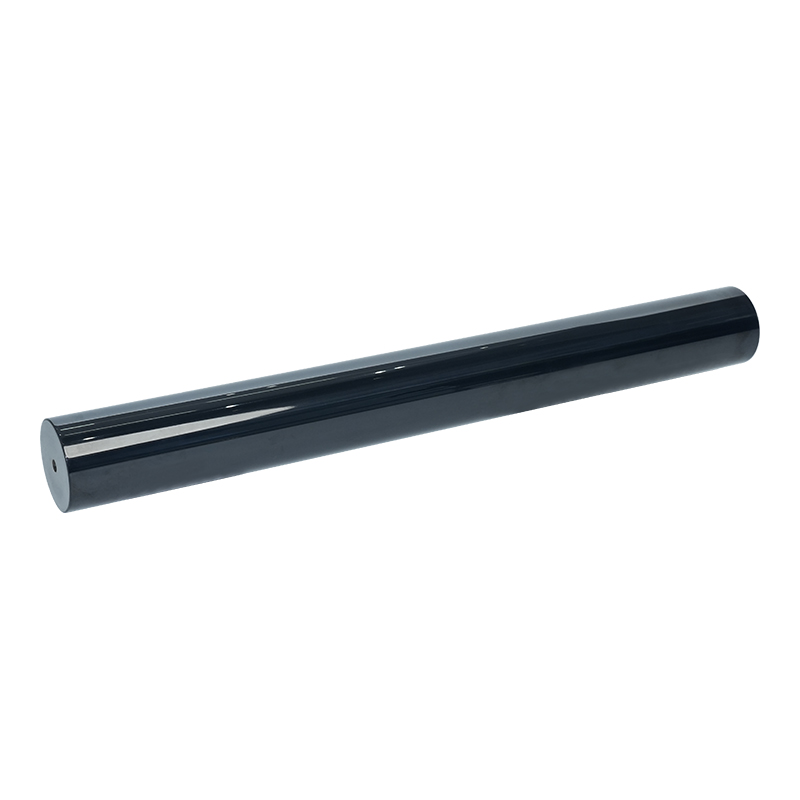
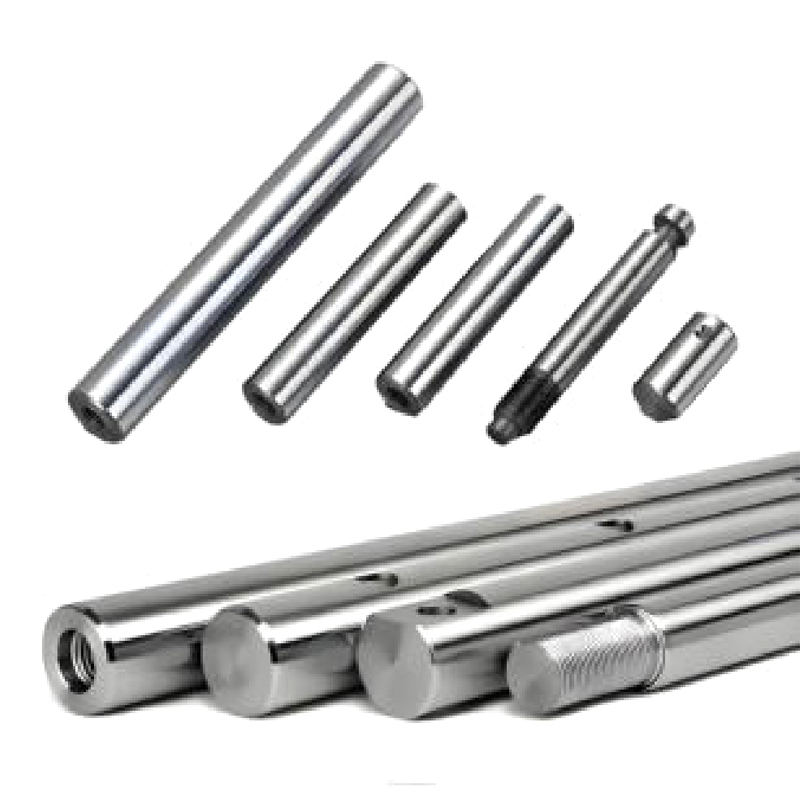 Precision Finish Alloy Steel Solid Piston RodThis solid rod offers tight dimensional accuracy and a smooth ground surface, supporting reliable seal performance in demanding hydraulic and mechanical systems, with custom machining available per drawings.View Product →
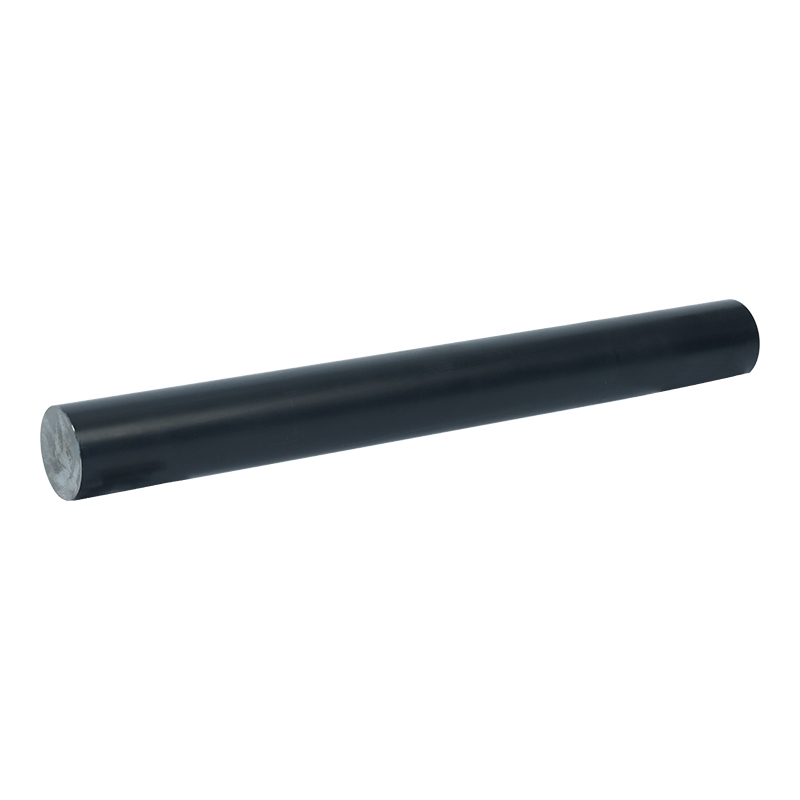
 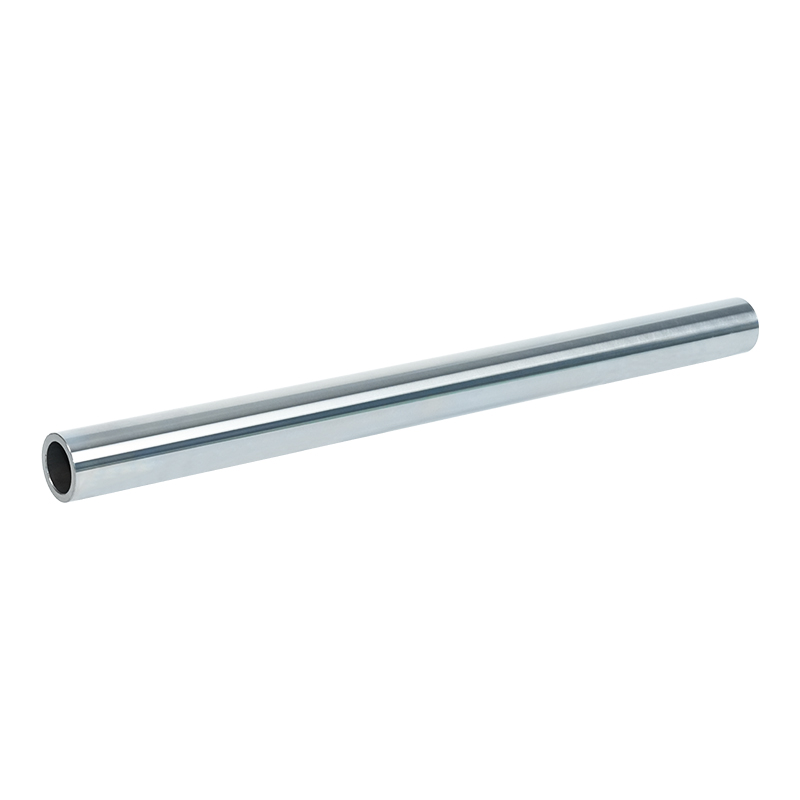 Hard Chrome Plated Hollow Piston RodA weight-reducing hollow design with internal channels, available with hard chrome plating for wear resistance, suited for compact hydraulic systems where reduced mass and routing are needed.View Product →
Rod seals ride directly on the piston rod surface. The seal lip needs a surface smooth enough to avoid abrasive wear but with enough micro-roughness to carry a lubricating film. In practice, hydraulic piston rods are ground and polished to a roughness of approximately Ra 0.2 to 0.4 µm. Anything rougher wears the seal lip; anything significantly smoother can starve the seal of oil and increase friction.
Roundness and straightness control the gap between the rod and the gland. Excessive ovality creates a wide gap on one side and interference on the other. Over time, the gland bearing and seal see uneven loading, which produces localized wear and eventually a visible leak path. This is why rod manufacturers hold roundness and straightness within a few hundredths of a millimetre rather than relying on surface texture alone.
| Parameter | Typical specification | Effect on performance |
|---|---|---|
| Surface roughness Ra | 0.2 to 0.4 µm | Seal wear and friction |
| Straightness | Max 0.05 mm/m | Gland load distribution |
| Roundness | Max 0.02 mm | Uniform sealing gap |
| Diameter tolerance | f7 to h8 | Fit with gland and seals |
Bare ground steel, even induction-hardened, is not enough for most hydraulic applications. The rod is exposed to moisture, salt spray, cleaning chemicals, and abrasive dust. A coating system has to provide hardness for wear resistance, corrosion protection for the base steel, and compatibility with the seal material.
Hard chrome is the industry baseline. It is hard, around 800 to 1000 HV, has a low friction coefficient against typical seal compounds, and can be applied in controlled thicknesses from 20 to 50 µm. For clean indoor environments, hard chrome is the lowest-cost option with well-understood performance.
In marine and outdoor equipment, a duplex layer of milky-white chromium followed by hard chromium provides better corrosion resistance than single-layer hard chrome. Nickel plus hard chromium systems behave similarly in salt-laden conditions. These coatings cost more, but they extend service intervals where exposure is aggressive.
Ceramic coatings offer substantially higher hardness and corrosion resistance for high-wear, high-corrosion applications. Laser cladding applies a metallurgically bonded overlay and is also the standard route for repairing damaged rods. QPQ (quench-polish-quench) nitriding provides a lower-cost alternative with good wear properties, though the hardened case is thinner.
For most general-purpose cylinders, a hard chrome coated rod remains the practical default because its production behaviour is well documented and its cost per operating hour is low.
| Coating system | Typical hardness (HV) | Corrosion resistance | Typical thickness |
|---|---|---|---|
| Hard chrome | 800 to 1000 | Good | 20 to 50 µm |
| Milky-white + hard chrome | 800 to 1000 | Very good | 30 to 60 µm |
| Nickel + hard chrome | 800 to 1000 | Very good | 30 to 60 µm |
| Ceramic | 1000 to 1400 | Excellent | 100 to 300 µm |
| Laser cladding | 700 to 900 | Excellent | 300 to 1000 µm |
| QPQ | 500 to 700 | Good | 10 to 30 µm |
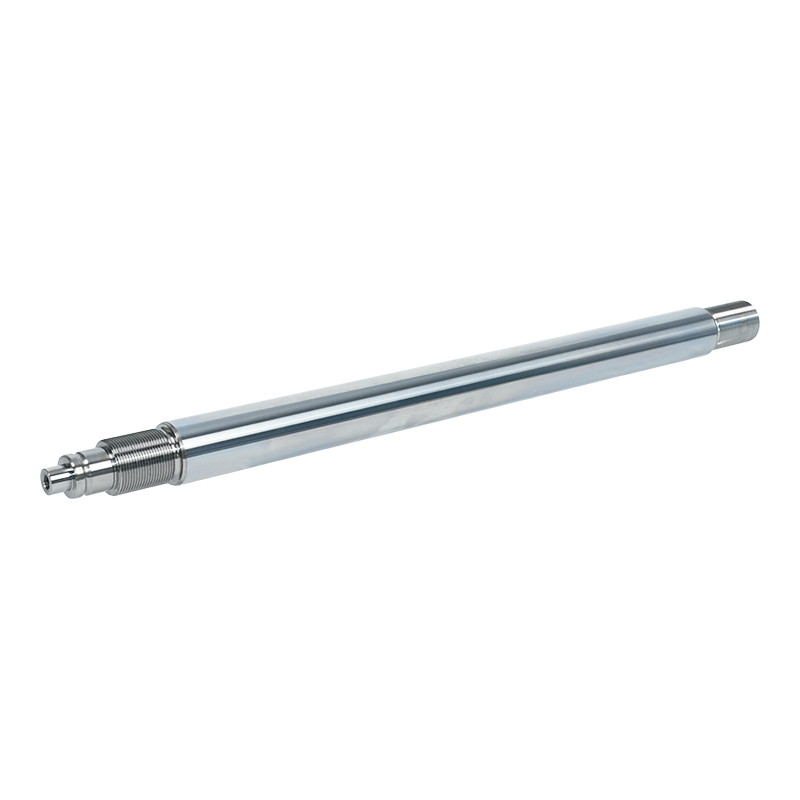
Hard Chrome Plated Piston RodElectroplated chrome provides high hardness and corrosion resistance, making this rod a practical default for general-purpose cylinders where documented performance and low cost per operating hour matter.View Product →Coating choice changes the machined rod diameter, seal compatibility, and unit cost. Hard chrome is applied at 20 to 50 µm per side, so the base steel is machined undersize to receive the plated layer. Ceramic and laser cladding need different surface preparation and usually a post-coating grind to restore final dimensions. The seal package must also be compatible with the coating chemistry.
In practice, specify the operating environment first, the cycle frequency second, and the cost target third. A standard hard chrome rod performs well in clean, indoor hydraulic presses. The same rod fails early on a dredge or a mining shovel. That is not a material defect; it is a specification mismatch.
When sourcing rods, look beyond the unit price. Process control drives the warranty cost of the final cylinder. Ask about induction hardening consistency, grinding and polishing capability, coating thickness uniformity, and documented inspection records. ISO 9001 certification is a baseline, not a differentiator.
A supplier that operates its own grinding, polishing, and electroplating lines holds direct control over the parameters that determine rod life, instead of coordinating multiple subcontractors. Wuxi Qunke Machinery follows this integrated model, supplying precision piston rods, coated rods, and complete hydraulic cylinders from a single facility that spans more than 25,000 square metres.
For engineering machinery, the rod enters the cylinder as a delivered component, and the fit with the seal system has to be planned early. Matching oil cylinders in engineering machinery is a practical read for teams finalizing rod and seal specifications together.

Contact Us
+86-137-0618-5800
No. 3 Dujuan West Road, Hudai Town, Binhu District, Wuxi City, Jiangsu Province
Get in Touch
Mobile

 English
 русский
 Deutsch