2026-09-23
Content
An alloy steel solid piston rod looks simple on a drawing, and then spends the next ten years being tested by the real world. It carries the working load, resists side thrust, slides through the seal thousands of times a day, and lives in rain, dust, heat and hydraulic fluid. Get the material grade and the surface finish right, and the cylinder runs quietly for a decade. Get them wrong, and the same cylinder starts weeping oil within a season. Since 2008, our team in Wuxi has manufactured hydraulic and pneumatic piston rods every working day, and this guide collects the practical points we raise with customers before a single bar of steel is cut.
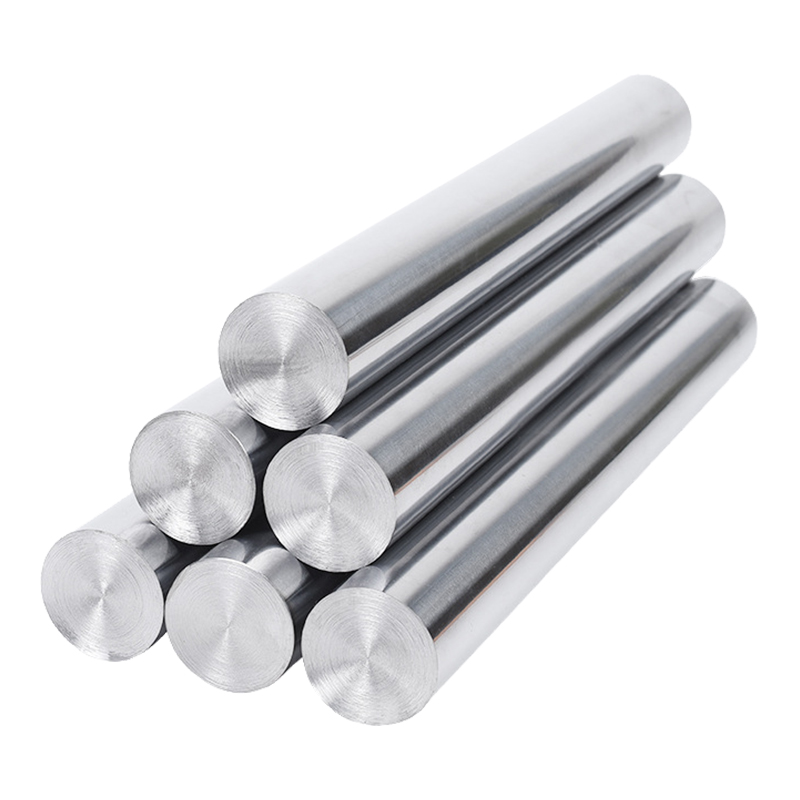
A piston rod is the moving link between the piston inside the cylinder barrel and the load outside it. On a solid rod, that link is machined from a single piece of bar stock rather than from tube, so the cross section is fully dense steel from the core out to the surface. The bar is normally cold drawn or peeled, then centerless ground and polished, and in most cases hard chrome plated to create the smooth, hard surface that the seal rides on.
The word alloy is doing real work here. Plain carbon steel can be strong, but elements such as chromium, molybdenum, nickel, manganese and vanadium improve hardenability, tempering resistance and fatigue performance. That combination is what lets a rod hold its straightness and hardness through millions of load cycles instead of softening, scuffing or cracking.
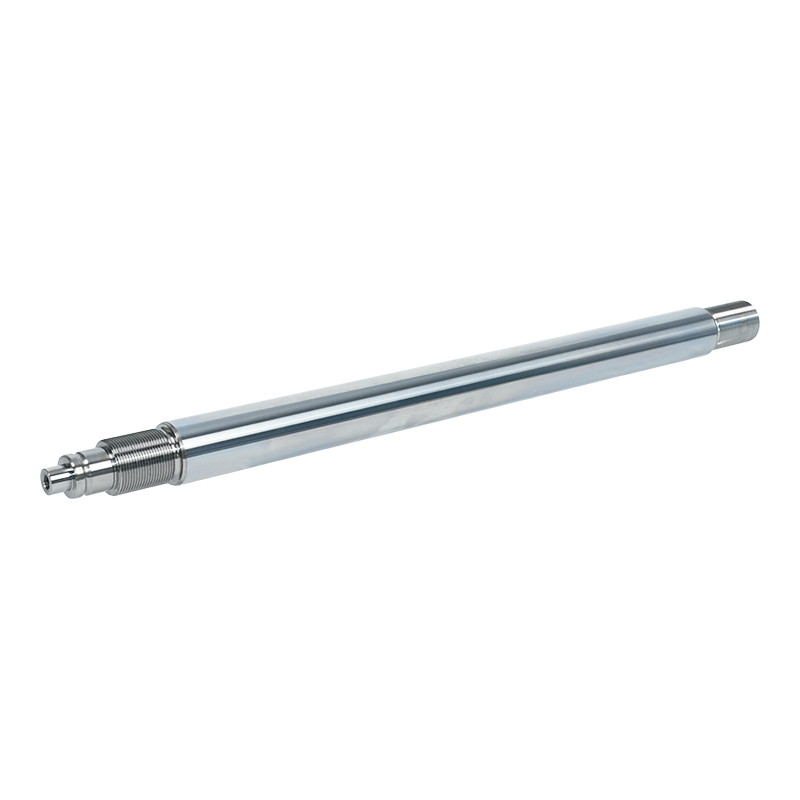
For standard cylinders, we supply a plain finish solid rod in ground condition, without an added wear layer, so the customer can cut, thread and plate to their own drawing.
 Plain Finish Stainless Steel Shaft Piston RodPlain finish solid rod is a precision-machined shaft material widely used in hydraulic systems, pneumatic equipment, automation machinery, and heavy-duty transmission ...View Product →
Piston rods are made from alloy steel or, in corrosive environments, stainless steel, with stainless normally reserved for cases where the extra cost is justified by the medium. For most industrial cylinders, alloy steel offers the best balance of strength, machinability and price. The grades that appear most often on our order sheets are:
Grade selection is a conversation rather than a lookup table. Diameter, stroke, working pressure, unsupported length and the presence of abrasive dust all push the decision in one direction or another, and it is usually the combination of them, not any single number, that decides the outcome.
Solid rods have high bending and torsional strength, which makes them the natural choice for withstanding large loads and high working pressures. Because the entire cross section carries the stress, a solid rod of a given outside diameter handles more axial load and resists buckling better than a hollow rod of the same diameter.
Hollow rods earn their place in other situations. Removing the core cuts weight, which helps on long horizontal axes and on moving equipment, and the bore can double as an oil passage in cylinders that need internal plumbing. Our catalogue covers both hollow oil pipe and hollow piston rod for exactly these cases.
If your application is a standard cylinder with heavy thrust and a moderate stroke, a solid alloy steel rod is almost always the simpler and more durable answer.
Hard chrome plating remains the workhorse of piston rod finishing. A typical layer of 20 to 30 micrometres gives a microhardness in the region of 800 to 1000 HV, which reduces friction against the seal lip, resists scratching from airborne grit and adds a barrier against corrosion. The plating is only as good as what sits underneath it, which is why grinding and polishing before the plating tank matter as much as the tank itself.
Not every application should default to hard chrome, though. In marine, offshore and humid plant environments we frequently recommend composite systems such as milky-white chrome plus hard chrome, or nickel plus hard chromium, where corrosion resistance is the limiting factor. Where abrasive slurry, elevated temperature or heavy shock loading dominates, ceramic coating, laser cladding or QPQ treatment can outlast a plain chrome layer by a wide margin.
We compare the main coating options side by side if you want to weigh them against your operating conditions.
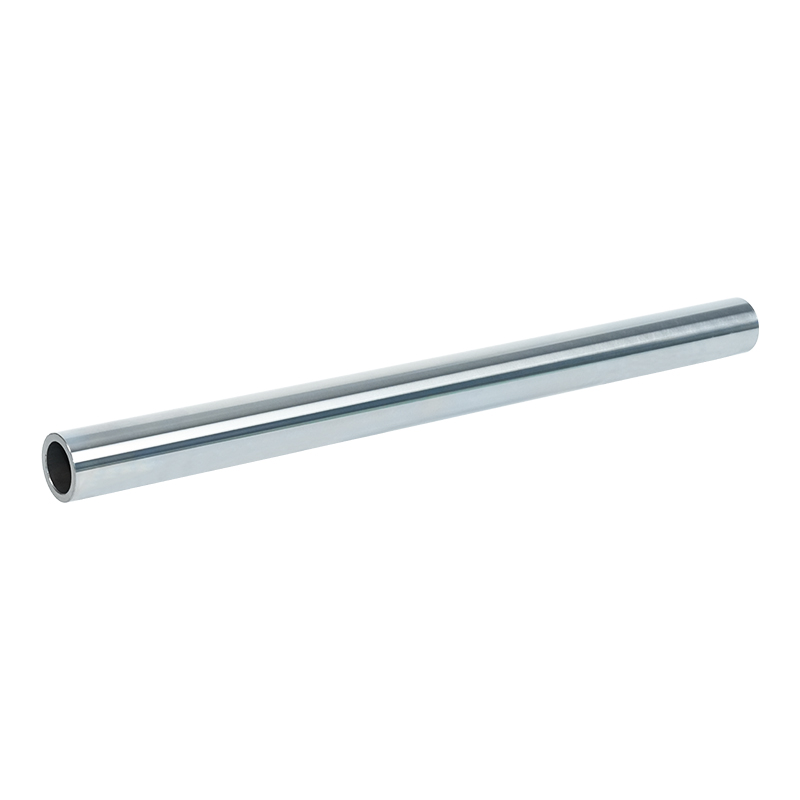 Hard Chrome Plated Piston RodHard chrome coating is a surface treatment produced by electroplating a dense layer of chromium onto a metal substrate. The coating exhibits excellent adhesion and uni...View Product →
Most disputes over piston rods trace back to a specification that was never written down. The table below lists the parameters we confirm with every customer, along with the ranges we typically see in industrial hydraulic service.
| Parameter | Typical target | Why it matters |
|---|---|---|
| Material grade | 42CrMo4, 40Cr, 45#, 20MnV6 | Sets strength, hardenability and weldability |
| Core hardness | 28 to 32 HRC | Balances load capacity with toughness |
| Case hardness | 50 to 55 HRC when induction hardened | Resists denting under seal pressure |
| Chrome thickness | 20 to 30 micrometres, up to 50 for heavy duty | Drives wear life and corrosion protection |
| Chrome microhardness | 800 to 1000 HV | Resists abrasive particle damage |
| Surface roughness | Ra 0.2 to 0.4 micrometres | Protects the seal lip and controls leakage |
| Straightness | 0.1 to 0.3 mm per metre | Prevents side loading and uneven seal wear |
| Diameter tolerance | h6, h8 or f7 to drawing | Determines fit with seal and guide bushing |
Good rods are not produced by inspection alone, but inspection is what keeps a bad batch from reaching the assembly line. The checks that pay for themselves most often are straightforward:
Our own quality system has been certified to ISO 9001 since 2011, and our article on what actually makes a rod precise explains how these measurements translate into a rod that seals properly.
The industries that buy solid rods from us share one characteristic: their equipment works hard, outdoors, and cannot afford unplanned downtime. The main applications include:
In these settings the rod is expected to survive contamination, temperature swings and long duty cycles, which is why the material and coating conversation at the quotation stage matters so much.
We operate from a plant of more than 25,000 square metres with several hundred employees, and our production flow covers CNC grinding, CNC polishing and intelligent environmentally controlled plating lines in one location. That means a rod is not shipped out to a third party between grinding and plating, and it also means we can move between plain finish and precision finish on the same drawing.
When a customer needs a tighter diameter tolerance, a finer surface finish or a specific concentricity between the rod and the piston seat, we produce it as a precision finish solid rod rather than asking the customer to compensate downstream.
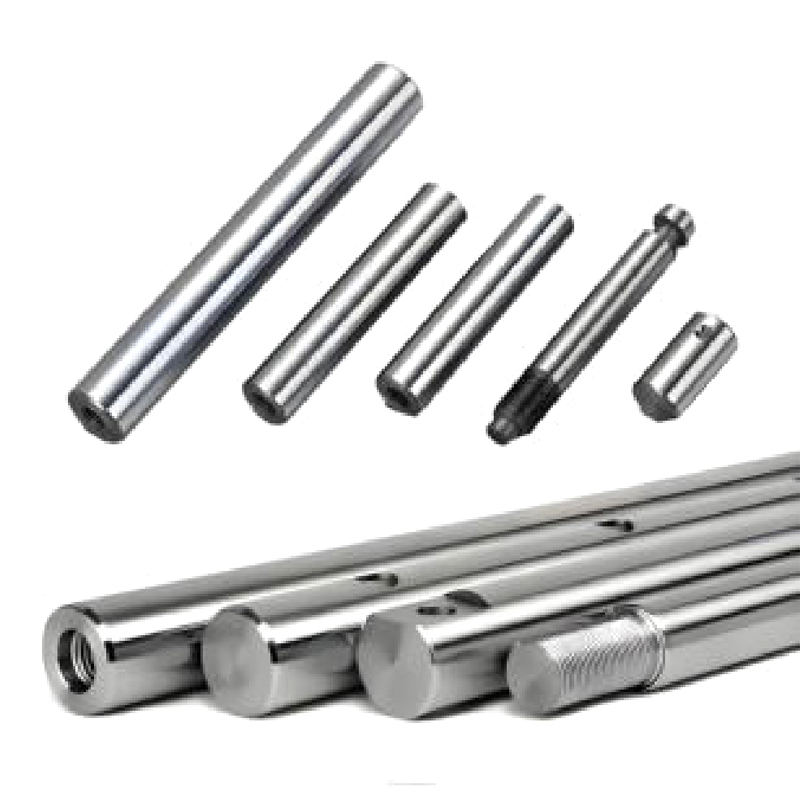 Precision Finish Alloy Steel Solid Piston RodThe precision finish solid rod is manufactured from high-quality alloy steels and stainless steels, including 45# steel, 40Cr, 42CrMo, and stainless steel. These mater...View Product →
An alloy steel solid piston rod is a small part of a machine and a large part of whether that machine stays in service. Getting the grade, the hardness, the coating and the dimensional limits defined before production starts costs a short conversation. Discovering them on site costs a cylinder rebuild, a lost shift and a customer who remembers. Send us your drawing, your working pressure and the environment the rod will see, and we will tell you honestly which combination of material and surface treatment will hold up.

Contact Us
+86-137-0618-5800
No. 3 Dujuan West Road, Hudai Town, Binhu District, Wuxi City, Jiangsu Province
Get in Touch
Mobile

 English
 русский
 Deutsch