2026-07-03
Content
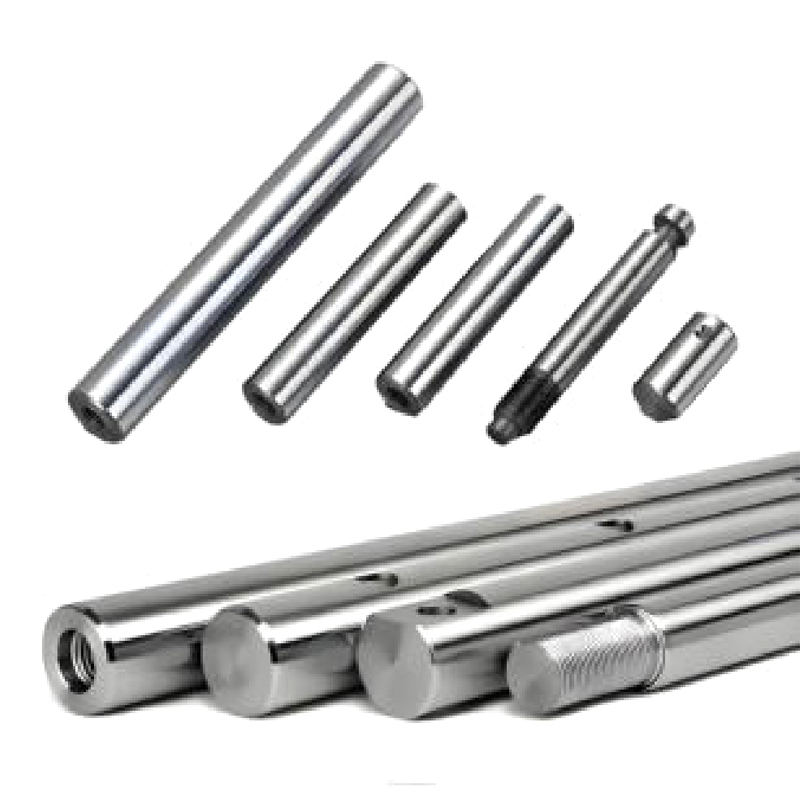
If you've ever had a hydraulic cylinder fail early, there's a good chance the root cause traces back to the piston rod, not the seals or the cylinder body. Precision piston rod processing is what determines whether a rod holds up under repeated pressure cycles or starts leaking and scoring within months. This guide breaks down what actually goes into precision piston rod processing, why each step matters, and what to check before accepting a batch from a supplier.
A piston rod isn't just a metal bar that moves in and out of a cylinder. It's a load-bearing, pressure-sealing component that has to survive thousands or millions of extension and retraction cycles without losing its shape, surface finish, or straightness. Even a small deviation in roundness or surface roughness can accelerate seal wear, allow fluid to bypass, or cause the rod to bend under side-loading. That's why precision piston rod processing isn't treated as an optional upgrade in most industrial applications — it's a baseline requirement for anything used in hydraulic cylinders, actuators, or heavy machinery.
The cost difference between a rod machined to loose tolerances and one machined to precision specifications is usually small compared to the cost of premature failure. A rod that fails in the field doesn't just need replacing — it often means downtime, seal replacement, and sometimes damage to the cylinder bore itself.
Precision piston rod processing typically follows a sequence of machining and finishing steps, each building on the accuracy of the last. Skipping or rushing any one of these stages tends to show up later as a functional problem.
The raw bar stock is first turned on a lathe to bring it down close to final diameter, removing the bulk of excess material and establishing the basic cylindrical shape. This stage sets the foundation for every later step, so runout and consistency here matter even though the surface finish is still rough at this point.
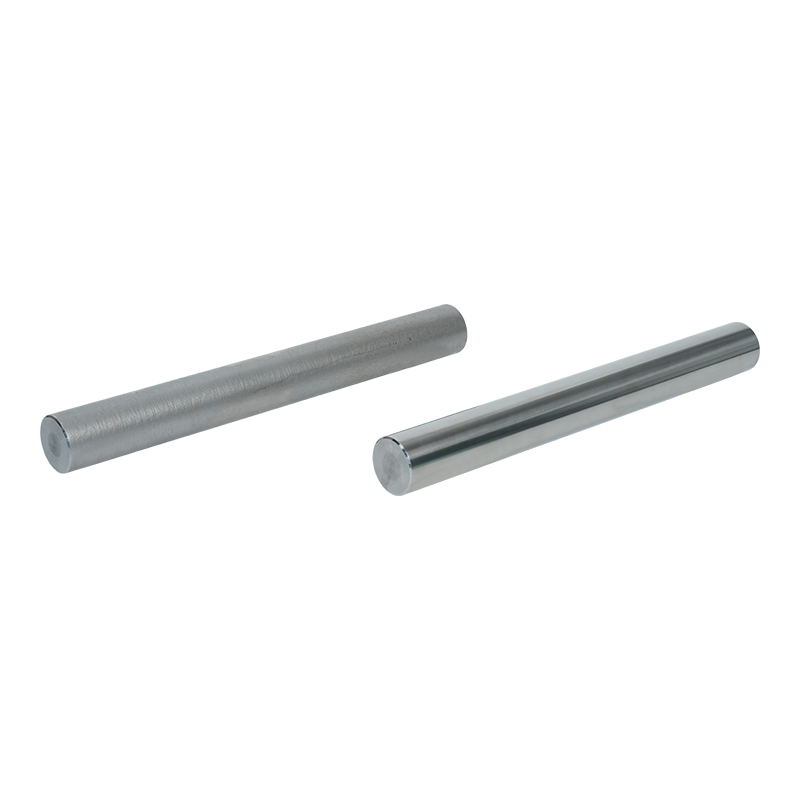
After turning, the rod goes through centerless or cylindrical grinding to bring the diameter within tight tolerance and improve straightness. Grinding is where most of the dimensional precision is actually achieved, since it removes the small inconsistencies left behind by turning and produces a much finer surface finish.
A polishing pass refines the surface further, targeting the low surface roughness values required for good seal contact. This step directly affects how well the rod interacts with hydraulic seals — a rod that's too rough will wear seals down quickly, while one that's overly smooth in the wrong way can actually reduce lubrication retention.
Long rods in particular can develop slight bends during earlier machining or heat treatment stages. A straightening process, often done mechanically under controlled pressure, corrects this before final inspection so the rod performs consistently along its full length under load.
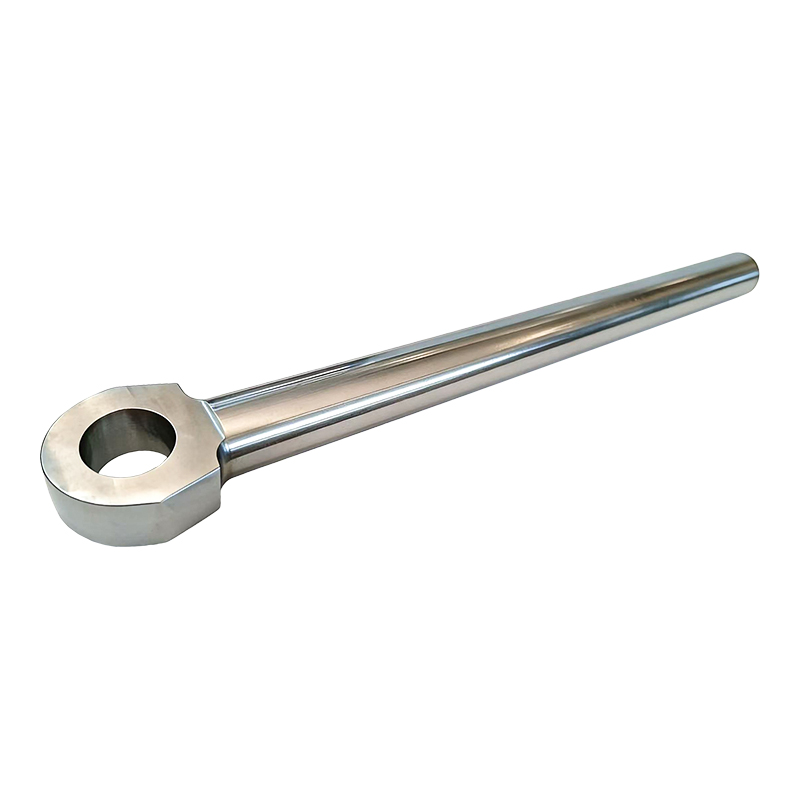
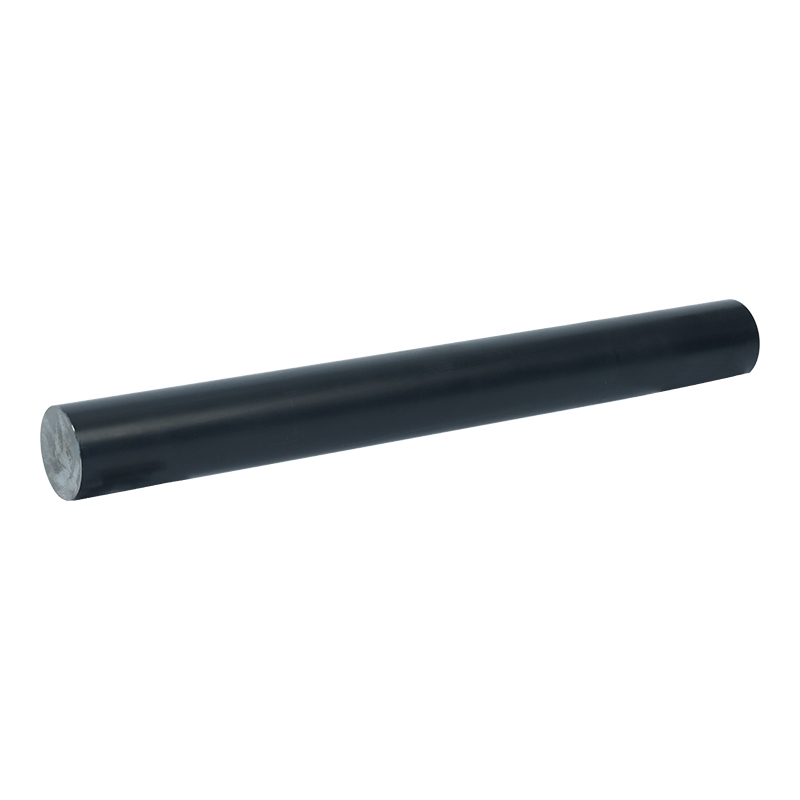
Machining alone doesn't make a piston rod ready for demanding applications. Surface treatments add the hardness, corrosion resistance, and wear protection that raw machined steel doesn't have on its own. Different treatments suit different operating environments, and choosing the wrong one is a common cause of early rod failure.
| Treatment | Main Benefit | Typical Use Case |
| Hard Chrome Plating | High wear resistance, good corrosion protection | General-purpose hydraulic cylinders |
| Nickel-Chrome Coating | Improved corrosion resistance over standard chrome | Marine, offshore, and humid environments |
| Induction Hardening | Increased surface hardness while retaining a tough core | Heavy-load industrial and mobile equipment |
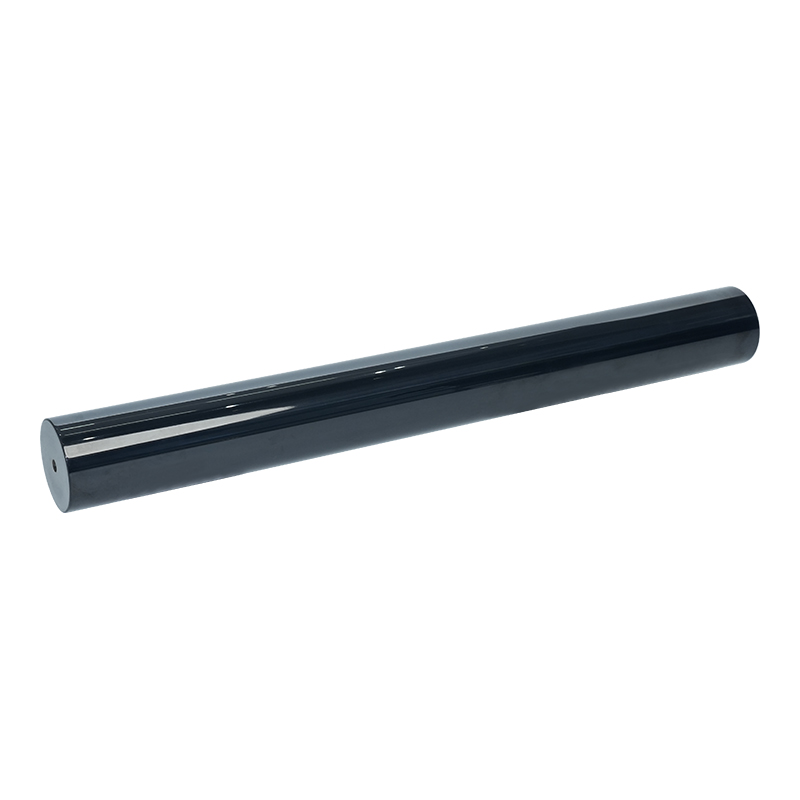
| Ceramic Coating | Excellent wear and chemical resistance | Aggressive chemical or high-cycle environments |
| Nitriding | Deep surface hardness without significant dimensional change | Precision applications sensitive to distortion |
When evaluating a supplier's precision piston rod processing capabilities, a few measurable specifications tell you far more than a general claim of "high precision." These are the numbers worth asking for directly.
Most piston rod failures can be traced back to a shortfall in one of the processing stages described above. Rods that are ground inconsistently often show uneven wear patterns once installed, since the seal contacts a slightly irregular surface with every stroke. Poor straightening leaves rods prone to side-loading under pressure, which accelerates both seal wear and rod fatigue over time.
Coating problems are another frequent issue, particularly when plating thickness is inconsistent or adhesion is weak. A coating that flakes or wears through prematurely exposes the base metal to corrosion, which can quickly turn a small surface defect into a rod that needs full replacement. Choosing a supplier that documents and controls each of these variables is usually the difference between a rod that lasts for years and one that causes repeat maintenance issues.
Before committing to a supplier for precision piston rod processing, it's worth getting clear answers to a few practical questions rather than relying on general marketing claims.
Precision piston rod processing isn't a single step you can check off a list — it's a chain of machining and finishing decisions that all need to hold up together. A rod that's perfectly ground but poorly coated will fail just as fast as one that's coated well but ground inconsistently. Getting clear documentation and measurable tolerances from a supplier up front is the most reliable way to avoid finding out about a weak link after the rod is already in service.

Contact Us
+86-137-0618-5800
No. 3 Dujuan West Road, Hudai Town, Binhu District, Wuxi City, Jiangsu Province
Get in Touch
Mobile

 English
 русский
 Deutsch