Why a Solid Shaft Changes the Buckling Calculation Entirely
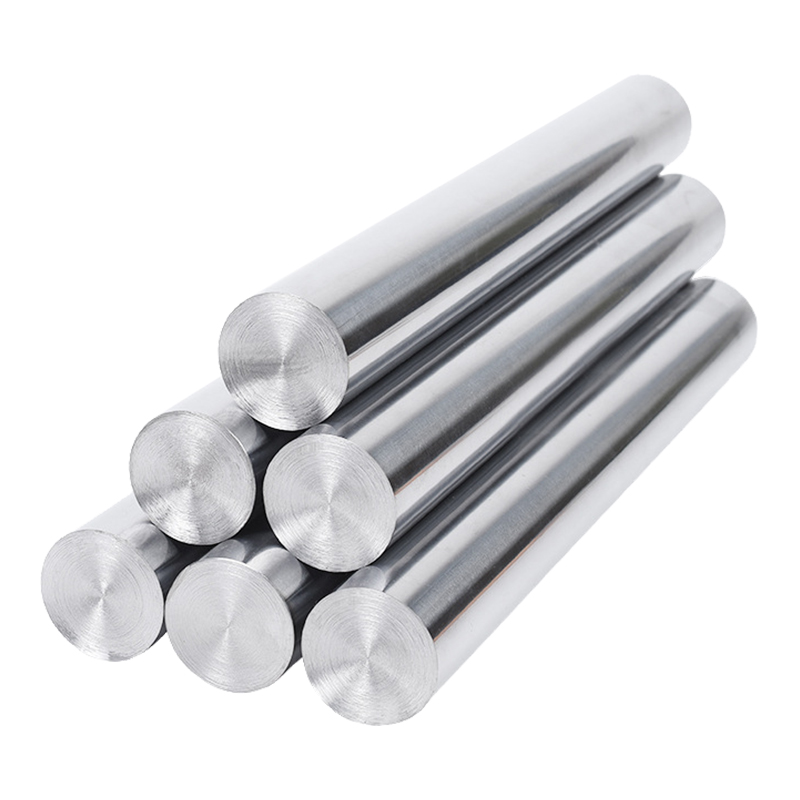
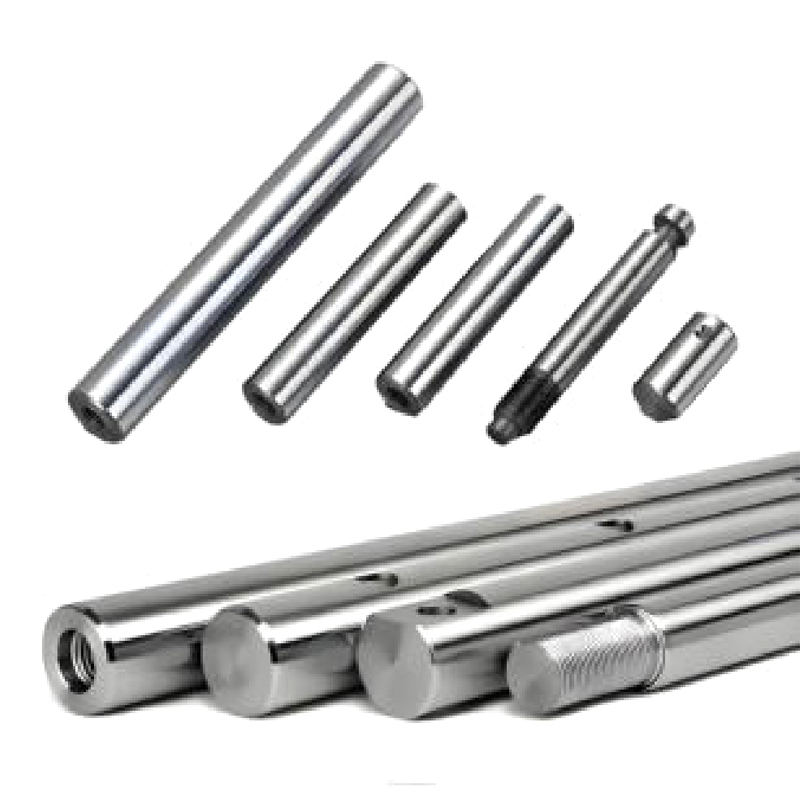
The buckling resistance of a piston rod depends heavily on its radius of gyration, and a solid piston rod has a fundamentally different cross-sectional profile than a hollow one of the same outer diameter. Because a solid rod distributes material evenly across the full cross-section rather than concentrating it near the outer wall, it generally offers a higher resistance to lateral deflection under compressive load at a given diameter. This is a large part of why solid shaft piston rod designs remain the default choice in applications where side loading and buckling risk are significant concerns, even though hollow designs can offer a better strength-to-weight ratio on paper.
The trade-off isn't always in favor of solid construction, though. In applications where weight reduction matters more than maximum rigidity, a properly engineered hollow rod can still meet buckling requirements while cutting overall mass. The decision usually comes down to whether the application prioritizes minimizing weight or maximizing resistance to bending and lateral load.
Where Weight Savings From a Hollow Design Stop Being Worth It
Hollow rods are sometimes chosen purely to reduce weight, but that benefit comes with added manufacturing steps, including deep hole drilling or gun drilling to create the internal bore, and additional inspection to confirm wall thickness consistency along the full length. For shorter rods or lower-pressure applications, these added steps can outweigh the marginal weight benefit, which is why a solid piston rod often ends up being the more practical and cost-effective choice once total production complexity is factored in rather than just material weight alone.
When the Trade-off Actually Favors Hollow Construction
Hollow rods tend to make more sense in very long-stroke applications where the cumulative weight of a solid rod would place excessive strain on the mounting structure or reduce the machine's overall dynamic response. In these specific cases, the added manufacturing complexity of a hollow bore is justified by the operational benefit of reduced mass.
Internal Material Defects Matter More Than Buyers Often Assume
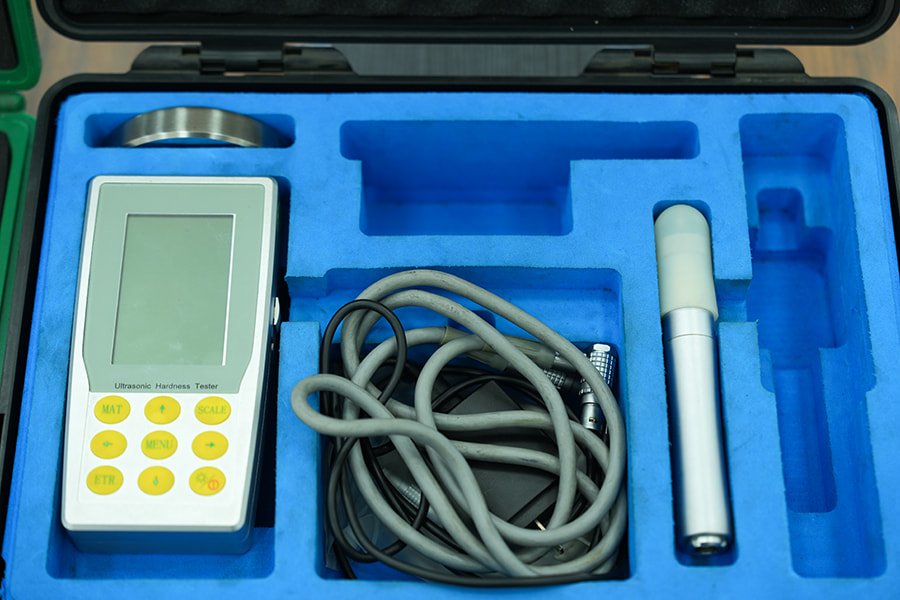
Because a solid shaft piston rod relies on consistent material properties across its entire cross-section, internal defects in the bar stock, such as porosity, inclusions, or segregation from the original steel casting process, can significantly affect fatigue performance even if the rod's exterior surface finish is flawless. These internal flaws are invisible during a standard visual inspection, which is why ultrasonic testing is commonly used on high-grade bar stock before it's machined into a finished rod.
- Porosity in the core steel can create stress concentration points that lead to premature fatigue cracking
- Non-metallic inclusions from the casting process reduce the effective load-bearing cross-section of the material
- Segregation, where alloying elements distribute unevenly through the bar, can create inconsistent hardness after heat treatment
- Ultrasonic testing before machining catches most of these defects long before they become a finished, plated rod
We've built ultrasonic testing into our bar stock inspection process at our Wuxi facility specifically because internal defects like these are the kind of issue that only shows up after a rod has already been in service, which is far too late to catch a problem.
Torsional Rigidity: An Overlooked Advantage of Solid Construction
While most discussions about piston rod design focus on axial load and bending resistance, torsional rigidity is another area where a solid piston rod tends to outperform a hollow equivalent of the same outer diameter. In applications where the rod experiences any twisting force, whether from misaligned mounting, uneven load distribution, or mechanical linkages that introduce rotational stress, the solid cross-section resists that twisting more effectively than a hollow one, since material closer to the center of the shaft still contributes meaningfully to torsional strength.
This becomes particularly relevant in construction machinery and piling equipment, where rods are rarely subjected to perfectly aligned, purely axial force in real working conditions. Even small amounts of torsional stress, if repeated over enough cycles, can contribute to fatigue issues that wouldn't be predicted by axial load calculations alone.
Solid vs Hollow Rod: A Quick Comparison
| Factor |
Solid Piston Rod |
Hollow Piston Rod |
| Buckling resistance at equal diameter |
Generally higher |
Lower unless diameter is increased |
| Weight per unit length |
Higher |
Lower |
| Manufacturing complexity |
Lower, no internal boring required |
Higher, requires deep hole drilling and bore inspection |
| Torsional rigidity |
Higher |
Lower at equal outer diameter |
| Typical use case |
High side-load, heavy-duty applications |
Very long-stroke applications where weight reduction is critical |
Machining Considerations Unique to Solid Rod Production
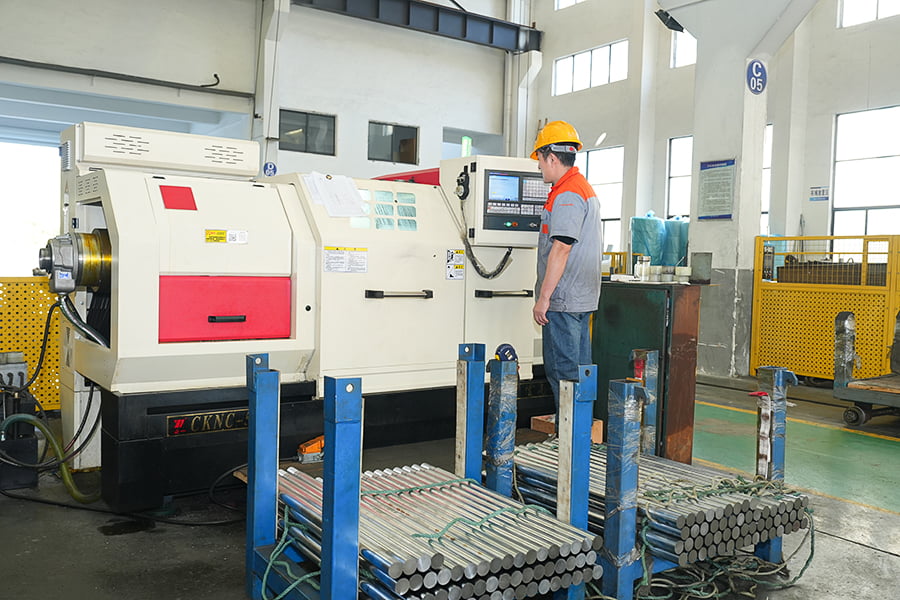
Producing a solid piston rod involves a more straightforward machining sequence than a hollow one, since there's no internal bore to drill, ream, or inspect. That said, solid rods still require careful attention during turning and grinding, since a fully solid cross-section retains more residual stress from the original bar stock if stress-relieving steps are skipped. Skipping this step can lead to a rod that appears straight immediately after machining but gradually bows over time as internal stresses redistribute.
Heat treatment uniformity is also more predictable in solid rods compared to hollow ones, since there's no internal surface competing for consistent heat penetration during hardening processes like induction hardening. This tends to result in more consistent hardness readings across the full length of a finished solid shaft piston rod.
Where Solid Piston Rods Make the Most Practical Sense
Solid rod construction tends to be the preferred choice in applications where reliability under variable, non-axial loading matters more than shaving off weight. This includes heavy equipment used in mining, piling machinery, and marine and port equipment, where rods are frequently exposed to side loads, vibration, and inconsistent load angles that a hollow design would need to be significantly oversized to handle safely.
- Applications with frequent side-loading or angled force benefit from the added rigidity of solid construction
- Shorter to medium stroke lengths rarely justify the added manufacturing cost of a hollow design
- Environments with high vibration or shock loading favor the torsional stability of a solid shaft
- Situations where long-term dimensional stability matters more than minimizing weight tend to favor solid rods
Across the water conservancy, metallurgy, and excavator projects we've supplied piston rods for over the years, solid shaft designs remain the more common request whenever the application involves anything beyond straightforward, perfectly axial loading.

 English
 русский
 Deutsch