2026-09-30
Content
Boom hydraulic piston rods sit at the heart of any machine that lifts, reaches, or positions a load at height. Whether the equipment is an aerial work platform, a truck-mounted crane, or a concrete boom pump, the rod inside each boom cylinder converts hydraulic pressure into controlled motion while surviving dust, vibration, and constant load reversals. For buyers and engineers, the challenge is rarely finding a rod that fits; it is finding one that keeps its dimensions, surface, and fatigue life through years of field work.
A boom cylinder is not a bench press. Its rod is often extended far from the cylinder body, which turns the rod into a cantilever that must resist bending as well as axial thrust. Side loads from the boom structure, wind, and bucket or platform weight all translate into bending stress along the exposed length. At the same time, the rod faces rain, salt, grit, and hydraulic fluid mist.
That combination of bending, corrosion, and sliding wear is why boom rods are usually specified with tighter straightness tolerances, harder surfaces, and better corrosion protection than general-purpose cylinder rods. A rod that meets nominal diameter but bends under load will score the gland seal, leak oil, and eventually force a cylinder rebuild.
The first decision in rod selection is whether the body should be solid or hollow. Solid rods are the default for most boom cylinders because they offer high stiffness in a compact envelope. They are straightforward to machine, straightforward to chrome, and easy to inspect. When the cylinder bore is large and the stroke is short, a solid rod usually wins on cost and reliability.
Hollow rods become attractive when weight matters or when the rod must carry an internal oil passage. A hollow piston rod can reduce moving mass on long-reach booms, which in turn lowers inertia and improves positioning accuracy. Hollow oil pipes serve a different purpose: they route hydraulic fluid through the rod itself, simplifying manifold design on certain boom and outrigger circuits.
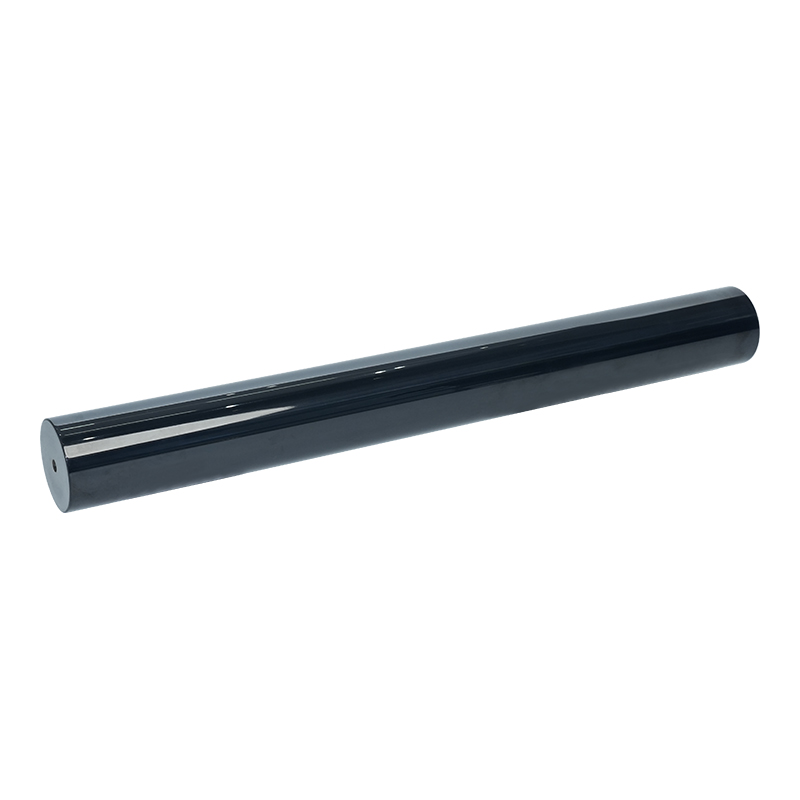
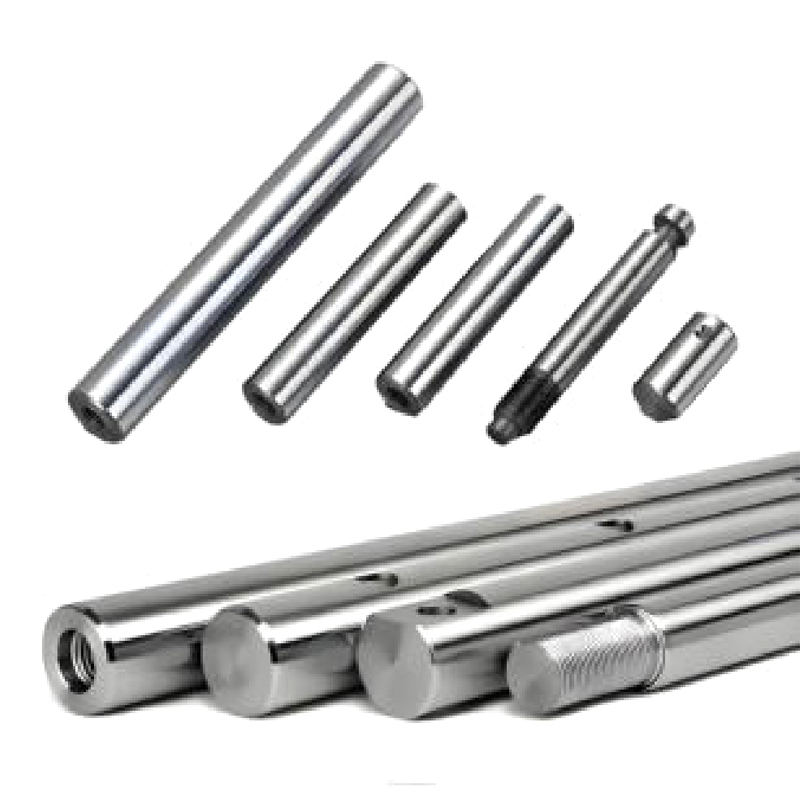 Precision-Finished Alloy Steel Solid Piston Rod for Hydraulic CylindersMade from alloy or stainless steels with F5–F9 accuracy and Φ20–Φ500 diameters, this solid rod supports boom cylinders needing dimensional consistency; optional hard chrome plating and custom machining are available.View Product →
For critical boom applications, a precision finish solid rod provides the dimensional consistency that gland seals and bearings depend on. Surface finish, roundness, and straightness all interact here, and small deviations that are invisible on a general-purpose rod can become leak paths on a boom that cycles thousands of times per shift.
Bare steel will not last long on a working boom. The surface of a piston rod is wiped by seals on every stroke, so it must be hard enough to resist abrasion and smooth enough to protect the seal lip. Coating choice is therefore one of the most consequential decisions in the specification.
Hard chrome plating remains the industry baseline. A well-applied hard chrome layer gives a hard, low-friction surface with good wear resistance at a reasonable cost. Where corrosion resistance matters more, a milky-white chrome and hard chrome coating adds a softer, more uniform underlayer that improves salt-spray performance. Nickel and hard chromium coating combines a corrosion-resistant nickel barrier with a hard chrome outer layer, which suits offshore, port, and other wet environments.
For more demanding duty cycles, ceramic coating and laser cladding offer alternatives. Ceramic coatings provide high hardness and excellent chemical resistance, while laser cladding fuses a metallurgically bonded layer that can be re-machined and rebuilt. QPQ coating, a quench-polish-quench nitriding process, produces a hard, wear-resistant surface with minimal distortion, which is useful on long, slender rods where straightness is critical.
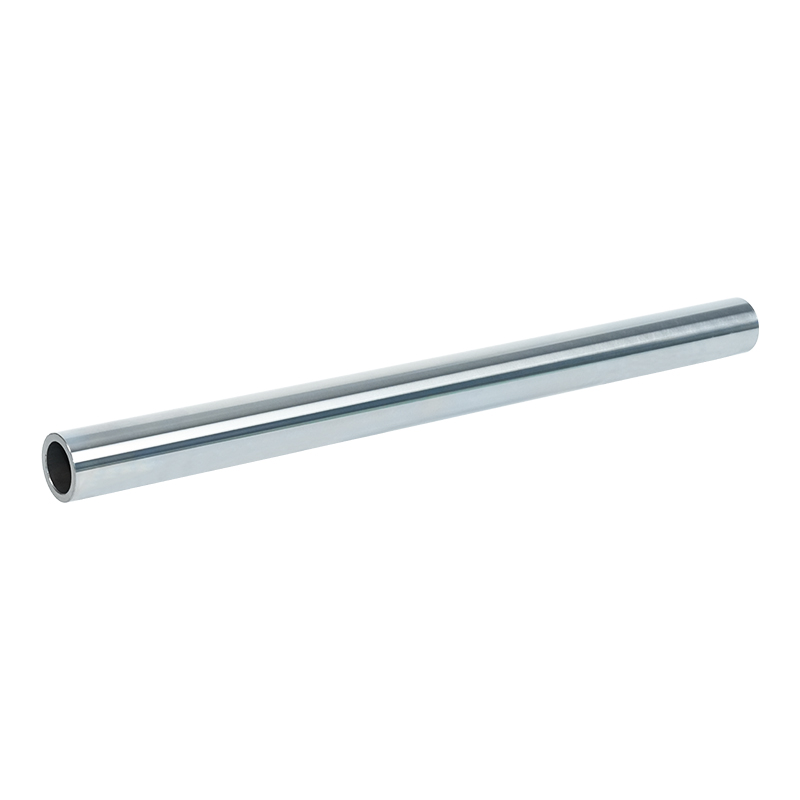 Hard Chrome Plated Piston Rod for Hydraulic CylindersElectroplated with dense chromium, this piston rod offers high surface hardness, wear and corrosion resistance, and a smooth finish for demanding hydraulic cylinder applications requiring sealing, fit, or dimensional restoration.View Product →
Many boom cylinders do not use a plain rod. Instead, the rod is delivered as an assembly that includes an eye, flange, or threaded end already joined to the rod body. The joining method affects fatigue strength, lead time, and repair strategy.
A forged one-piece rod forms the rod and end from a single forged piece, eliminating weld seams in the highest-stress region. This is the preferred choice for high-load boom cylinders where fatigue life is critical. Integral welding rod designs weld a separate end to the rod body, which allows more flexibility in end geometry and can be more economical for medium-duty applications. Split welding rod constructions divide the assembly into sections that are welded and then finished, which helps when the overall length exceeds available machining capacity or when the end material must differ from the rod material.
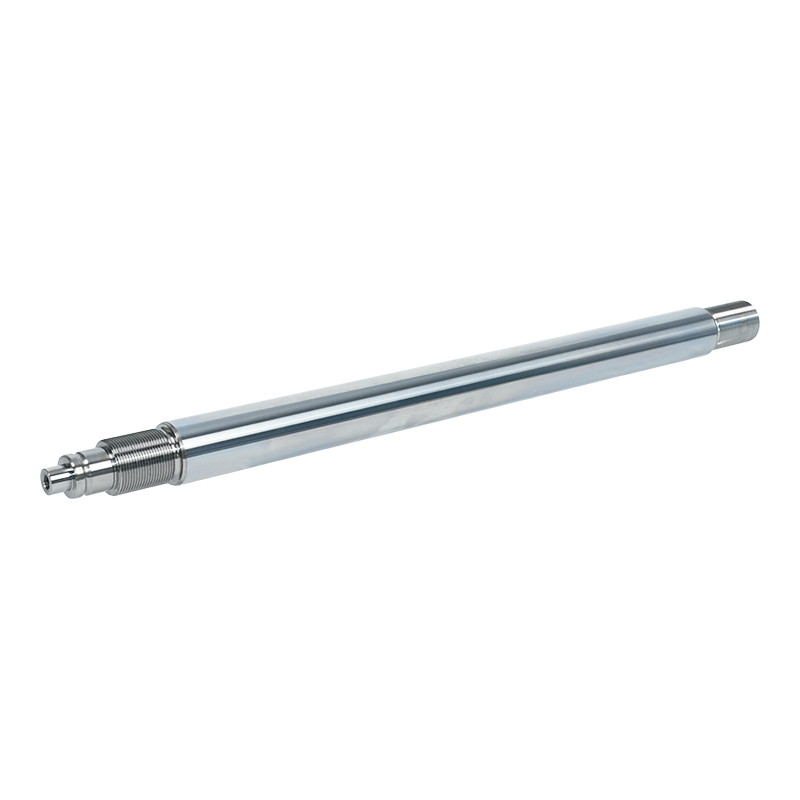
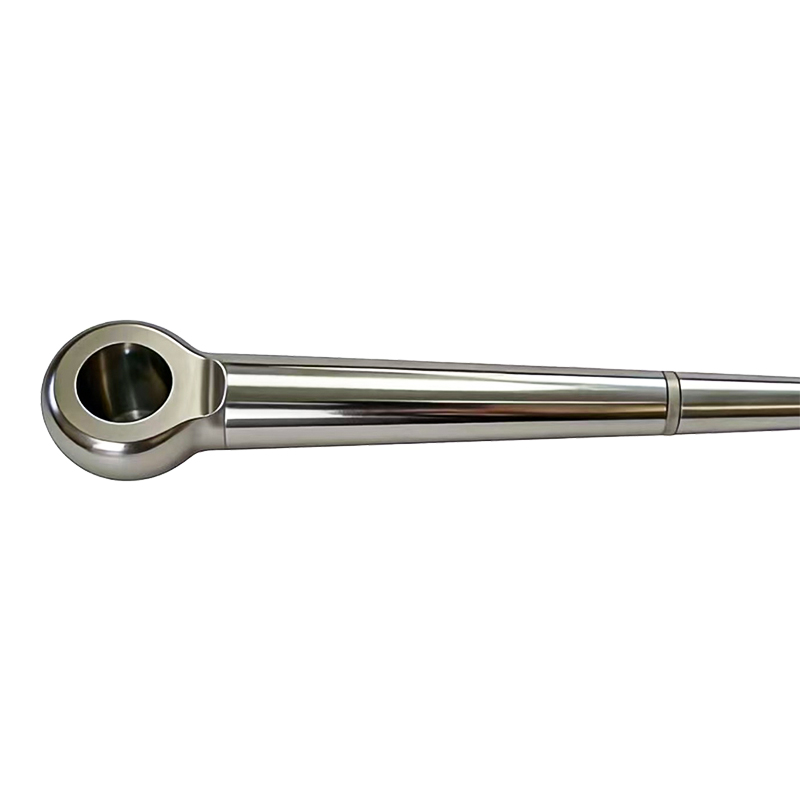 Forged One-Piece Hydraulic Cylinder Piston Rod AssembliesMade by integral forging without weld or assembly joints, this one-piece rod assembly provides continuous grain flow, high fatigue strength, F5–F9 accuracy, optional hard chrome plating, and custom machining for demanding cylinders.View Product →
Rod performance is decided long before the part reaches the machine. Steel chemistry, heat treatment, straightening, machining, grinding, polishing, and coating all leave their mark on the final surface. A supplier that controls these steps in-house has a shorter path to consistent output.
In our own production, the process starts with incoming material inspection and continues through CNC grinding, CNC polishing, and an intelligent environmentally controlled plating line. Each rod is checked for straightness, diameter, roundness, and surface roughness before coating, then rechecked after coating for thickness, adhesion, and surface defects. The company has held ISO 9001 and ISO 14001 certification since 2011, and the factory now covers more than 25,000 square meters with several hundred employees.
If you want a closer look at how precision is actually measured and maintained on a piston rod, our article on precision piston rod processing walks through the key parameters.
The right rod is the one that matches the load, environment, and maintenance model of the machine. The table below summarizes common boom applications and the rod choices that tend to fit them.
| Application | Typical Rod Body | Common Surface Treatment | Key Focus |
|---|---|---|---|
| Aerial work platform | Solid, precision finish | Hard chrome | Straightness, seal life |
| Truck-mounted crane | Solid or hollow | Hard chrome, nickel-chrome | Bending resistance, corrosion |
| Concrete boom pump | Solid, high stiffness | Hard chrome, ceramic | Fatigue life, abrasion |
| Port and offshore equipment | Solid or assembly | Nickel-chrome, laser cladding | Salt spray, repairability |
| Long-reach excavator | Hollow or solid assembly | Hard chrome, QPQ | Weight, distortion control |
Boom hydraulic piston rods are a small part of a large machine, but they carry a disproportionate share of the reliability burden. A rod that is straight, hard, and properly protected keeps seals alive, holds pressure, and keeps the boom moving predictably. A rod that is underspecified becomes a recurring maintenance item.
If you are specifying rods for a new boom design or looking for a supplier who can support an existing fleet, the practical path is to define the load case, the environment, and the expected service interval first, then match rod body, assembly type, and coating to those inputs. That sequence keeps cost where it belongs and performance where it matters.

Contact Us
+86-137-0618-5800
No. 3 Dujuan West Road, Hudai Town, Binhu District, Wuxi City, Jiangsu Province
Get in Touch
Mobile

 English
 русский
 Deutsch