2026-09-08
Content
A hydraulic cylinder piston rod is the most mechanically loaded component in a hydraulic actuator. It converts fluid pressure into linear motion, and it is the first component to show wear when a cylinder is undersized, misaligned, or incorrectly treated. In field repairs, the rod is often the reason a cylinder is rebuilt. So if you are specifying a new rod, replacing one, or evaluating a supplier, the practical questions are: what diameter, what surface treatment, what tolerance, and what should you expect it to cost over the service life? The short answer is that a piston rod should be selected for the combined effect of column strength, surface hardness, and corrosion resistance, not for a single property. This article explains those three factors using the details that matter in procurement and engineering.
The piston rod is the shaft that connects the hydraulic cylinder barrel to the external load. It passes through a gland and guides the piston inside the bore. When pressure is applied, the rod extends or retracts, carrying the full cylinder force. The rod also controls seal contact and wiper action. As a result, its diameter tolerance and surface finish directly influence leakage and service life.
In a long stroke application, a thin rod can bend under compression. This is called a column strength problem. A more secure approach is to increase the rod diameter or to reduce the unsupported length. Thicker rods also add stiffness and reduce side-load deflection. For a given bore size, the piston rod diameter determines the extension speed and the return force, so it is not just a structural choice; it is also a performance choice.
The most common piston rod failures fall into two categories. The first is structural. A rod that is too small for the stroke length has low column strength, especially when pushing loads. A long, thin rod will bend or break. The second category is surface-related. Scratches, pitting, and corrosion can damage the rod surface, and these imperfections will eventually destroy the seals. Hard chrome plating is the standard protection, but the chrome layer is typically only 20 to 40 microns thick. Once a scratch penetrates that layer, moisture can reach the base metal and start an undercutting attack. That is why a polished and correctly treated rod is worth more than a cheap rod with a poor finish.
Another common issue is misalignment. If the rod is mounted at an angle or the cylinder is not aligned with the load path, side forces create extra friction and uneven wear. In mobile equipment, this often shows up as one-sided chrome wear and repeated seal replacement. The right response is not a thicker coating but a better designed rod end and a more rigid support structure.
A piston rod starts as a cold-drawn or forged steel bar. The manufacturing process must control the entire sequence from raw material to finished assembly. Many rod failures trace back to skipped steps in that sequence, such as insufficient polishing before plating. A typical process begins with centerless grinding to achieve the required diameter tolerance, often to h8 or better. Then the rod is polished to a surface roughness of Ra 0.2-0.4 microns. If the application calls for induction hardening, the rod is heated and quenched before plating. This gives a hard case while keeping the core tough.
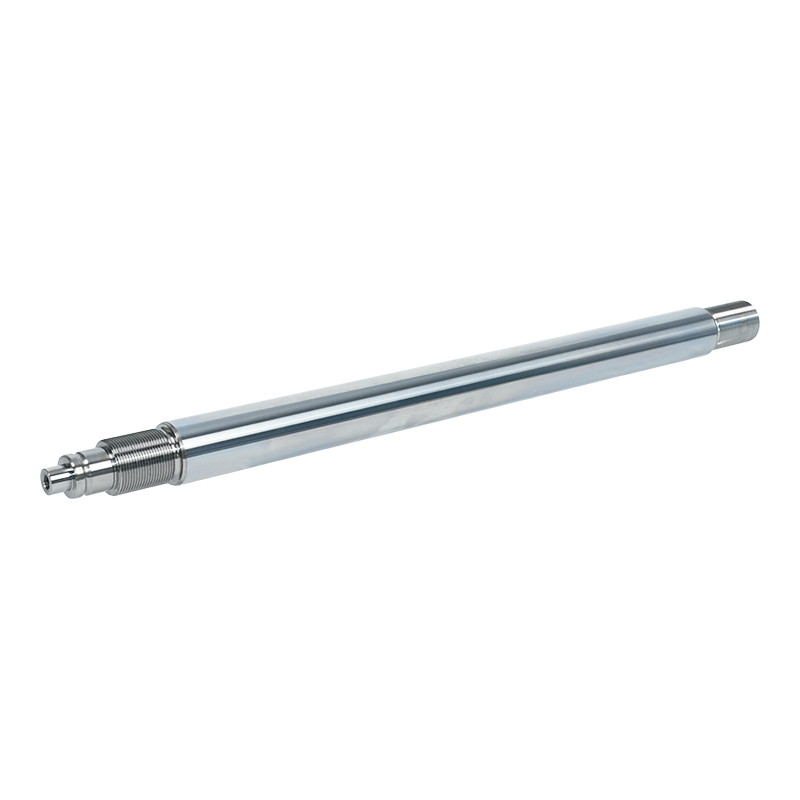
After heat treatment, the rod goes through an electrolytic plating line. The chrome thickness is controlled between 20 and 40 microns for standard hydraulic cylinders. Finally, the rod is polished again to remove chrome peaks and achieve the specified finish. This final finish is critical because a rough rod will tear the seals. Wuxi Qunke Machinery operates dedicated grinding, polishing, and intelligent electroplating lines to maintain this sequence, and the company's precision finish solid rod is manufactured specifically for applications that require consistent dimensional control.
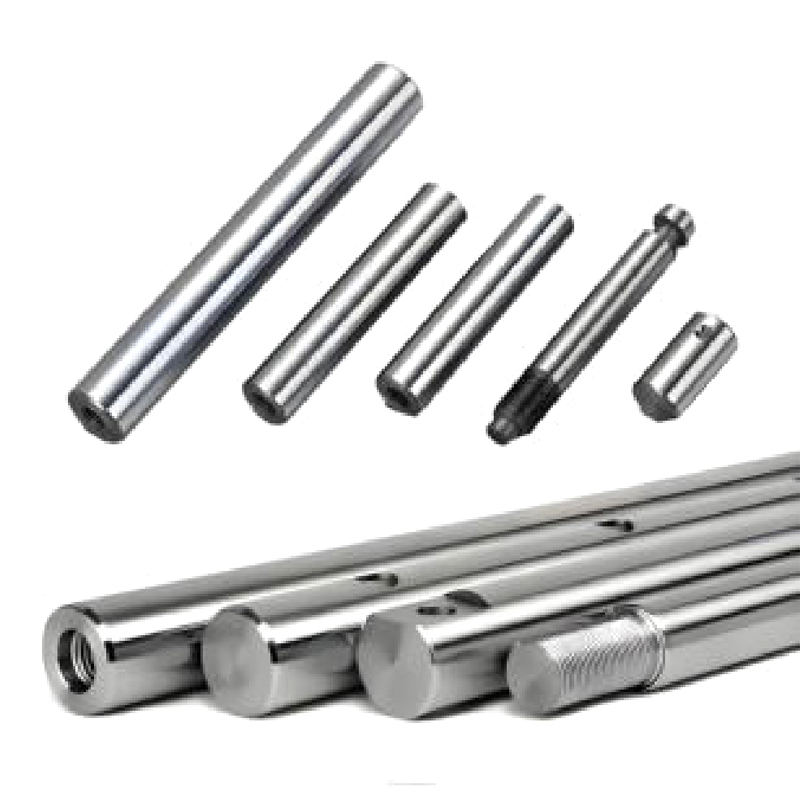 Precision Finish Alloy Steel Solid Piston Rod for Precise Hydraulic SystemsManufactured from high-quality alloy steels, this rod achieves tight tolerances and a superior surface finish. Available in diameters from Φ20 to Φ500, it ensures consistent dimensional control for demanding hydraulic and mechanical applications.View Product →
To understand which parameters actually make a rod precise, you can read our article on precision piston rod processing. It covers tolerance, straightness, and surface roughness in practical terms.
Selecting the right surface treatment is a tradeoff between wear resistance, corrosion resistance, cost, and repairability. The table below is a starting point for matching a treatment to your duty cycle.
| Treatment | Typical thickness | Wear resistance | Corrosion resistance | Typical application |
|---|---|---|---|---|
| Hard chrome | 20-40 microns | High | Good | General hydraulic cylinders, construction machinery |
| Nickel + hard chrome | 25-50 microns | High | Very good | Marine, offshore, and corrosive environments |
| Ceramic coating | 50-150 microns | Very high | Excellent | High-wear, dry-running, and high-temperature applications |
| Laser cladding | 1-3 mm | Very high | Very good | Heavy-duty repairs and abrasive media contact |
| QPQ | 10-20 microns | Medium-high | Excellent | Small rods, precision components, corrosion-critical parts |
Hard chrome remains the most economical choice for ordinary construction and industrial cylinders. It provides good wear resistance and can be machined easily. When the environment is more aggressive, nickel-under-chrome or ceramic coatings offer a better corrosion barrier. Laser cladding is a repair-oriented approach that builds up thick layers for a worn or damaged rod. QPQ treatment is a thermochemical process that produces a compound layer, but it is less common for large-diameter rods.
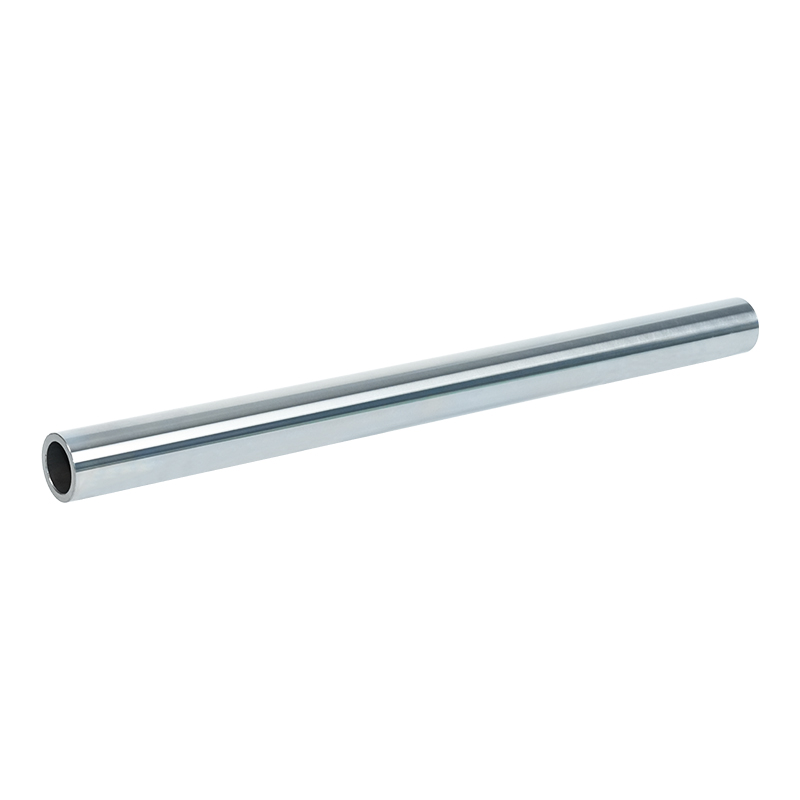 Hard Chrome Plated Piston Rod for Wear and Corrosion ResistanceElectroplated with a dense hard chrome layer, this rod offers excellent wear resistance and corrosion protection. It provides a smooth surface, extending service life in standard industrial cylinders and reducing maintenance.View Product →
If your duty cycle is mainly abrasive wear without aggressive chemicals, hard chrome is still difficult to beat on value. For most hydraulic cylinder piston rod applications, a properly controlled hard chrome layer will deliver years of reliable service.
When you request a quote, be explicit about the following parameters: material grade, rod diameter and tolerance, surface roughness, hardness, coating type and thickness, and straightness. Material selection usually includes carbon steel 45# for standard applications, 40Cr for higher strength, or stainless steel where corrosion is severe. Diameter tolerance is often h8 or h9, but many hydraulic cylinder manufacturers request k6 or h7 for critical seals. Surface roughness should be specified as Ra, typically 0.2-0.4 microns after plating. Straightness is normally measured as 0.05 mm per meter for precision rods.
For high-force, shock-loaded applications, a forged one-piece piston rod reduces the risk of weld failure. Forged rods are stronger because the grain flow follows the shape of the part. They are commonly used in mining, piling machinery, and large construction equipment. If you need the rod to also function as an oil passage, a hollow rod is a better choice.
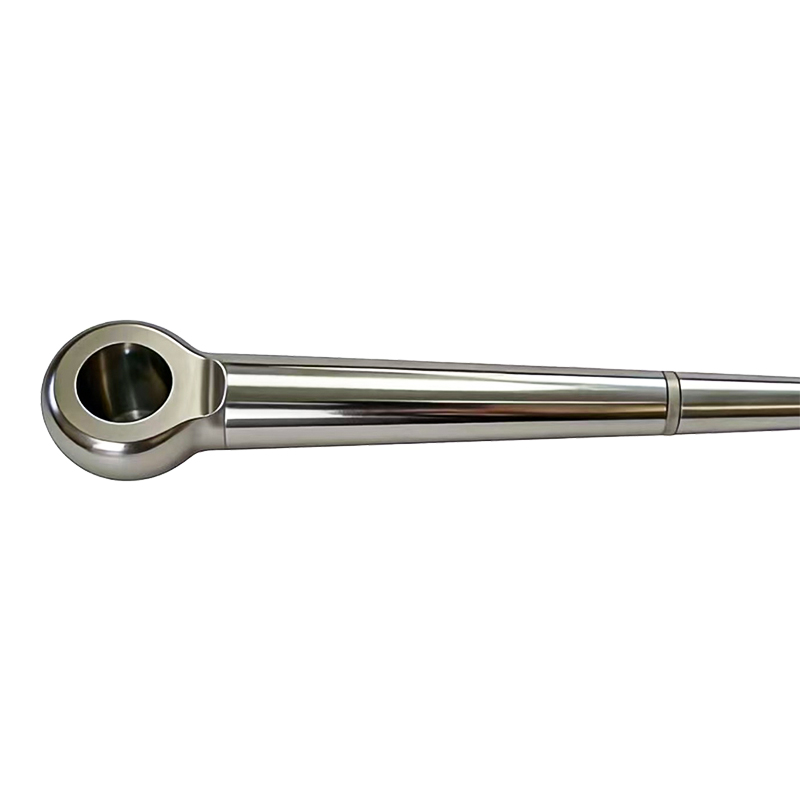 Forged One-Piece Hydraulic Cylinder Piston Rod AssemblyIntegrally forged to eliminate weld joints, this rod delivers superior strength and fatigue resistance. Suited for shock-loaded and heavy-duty equipment, it ensures reliable performance with continuous grain flow.View Product →
In addition, confirm the supplier's inspection capabilities. A reliable supplier will have a dedicated quality control step that checks diameter, surface roughness, plating thickness, and straightness after each process stage. Avoid relying on a single final inspection, because a rod with a hidden scratch under the chrome will pass a casual check.
A piston rod supplier with broad process experience can help you avoid costly mistakes. Wuxi Qunke Machinery has been manufacturing hydraulic cylinders, pneumatic cylinders, and precision piston rods since 2008. The company now operates a production area of 25,000 square meters and works with clients in engineering machinery, metallurgy, water conservancy, ship and port equipment, oilfields, mining, and piling machinery. Its strategic partnerships with major construction equipment manufacturers have shaped a quality system that supports both prototype work and batch production.
When matching oil cylinders to engineering machinery, the rod specification is only one part of the overall fit. The gland, wiper, seal type, and mounting style also affect performance. A supplier that can review the complete hydraulic cylinder application, not just the rod, will provide a more robust solution. We have written a practical guide on matching oil cylinders to engineering machinery that explains this fit in detail.
For customers who require long-term supply, process consistency matters as much as first-article quality. A factory with dedicated CNC grinding, polishing, and intelligent electroplating lines can maintain the same tolerance from the first rod to the thousandth. That consistency is what keeps a machine running through a multi-year service interval.
Hydraulic cylinder piston rods are not a commodity. They are a precision component that has to survive repeated loading, side forces, and the environment. Column strength decides whether it bends; surface treatment decides whether it corrodes; tolerance decides whether the seal lasts. If you focus on all three when specifying a rod, and if you work with a supplier that can demonstrate process control and field experience, you will save money on repairs, downtime, and premature replacements.

Contact Us
+86-137-0618-5800
No. 3 Dujuan West Road, Hudai Town, Binhu District, Wuxi City, Jiangsu Province
Get in Touch
Mobile

 English
 русский
 Deutsch