2026-10-13
Content
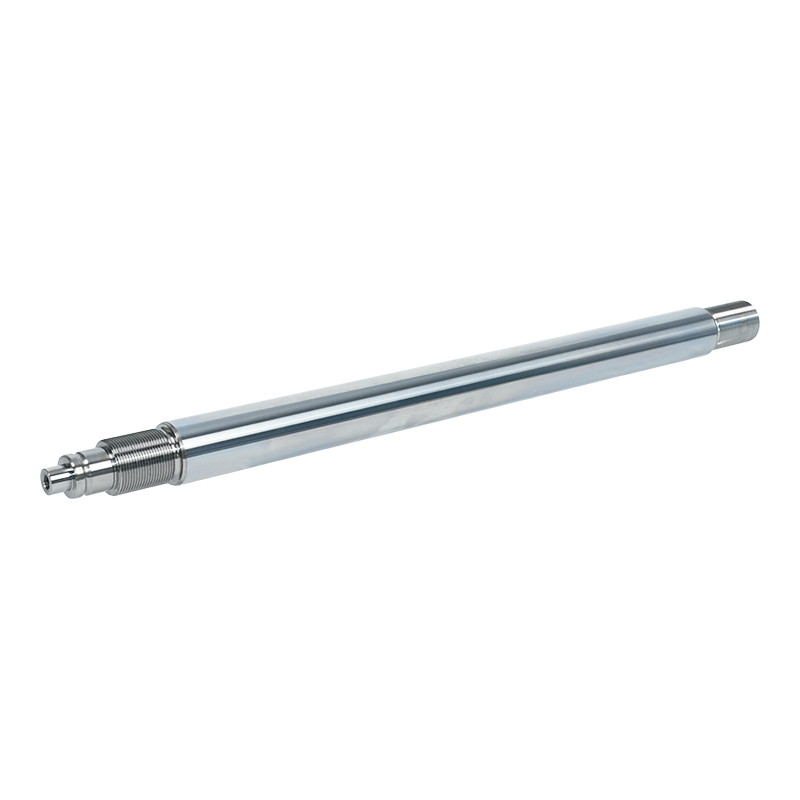
A hydraulic cylinder piston rod looks like a simple piece of steel, which is exactly why it gets overlooked until something goes wrong. In practice, the rod is the part that carries every load, absorbs every side force and takes the full brunt of dust, moisture and salt in the working environment. When a cylinder starts weeping oil, drifting under load or scoring its seals, the rod surface is usually where the story began.
We have been manufacturing piston rods for water conservancy, metallurgy, construction machinery, ship and port equipment, oil fields, mining, piling rigs and excavators since 2008. We tend to look at this part from the inside out: what it is made of, how it is finished, and how it should be specified for the job it has to do.
In a double-acting cylinder, the piston rod is the only part of the moving assembly the outside world ever sees. It threads or welds to the machine, it slides through the rod seal and the guide bushing on every stroke, and it transfers the piston force to whatever the machine is pushing, lifting or holding.
That job creates two demands pulling in opposite directions. The surface has to be hard and smooth enough to resist scoring and to let the seal slide without wearing a groove into it. The core has to stay tough enough to take bending loads and occasional shock without snapping. A rod hardened all the way through will resist wear beautifully and then crack the first time someone side-loads it; a soft rod will bend gracefully for years and wear out its seals in a season. The workable compromise is a tough core with a hard, well-bonded surface layer, which is why the finish matters quite as much as the base material.
Solid rod is the default choice for most hydraulic cylinders, and for good reason. It is simple to machine, gives high stiffness for its diameter, and the cost per metre is easy to justify. Our range splits it into a plain finish version for general fabrication work and a precision finish version where diameter tolerance, straightness and surface roughness all have to sit inside a tighter band, the sort of rod that goes into a cylinder with a close-fitting guide bushing or a servo-controlled axis.
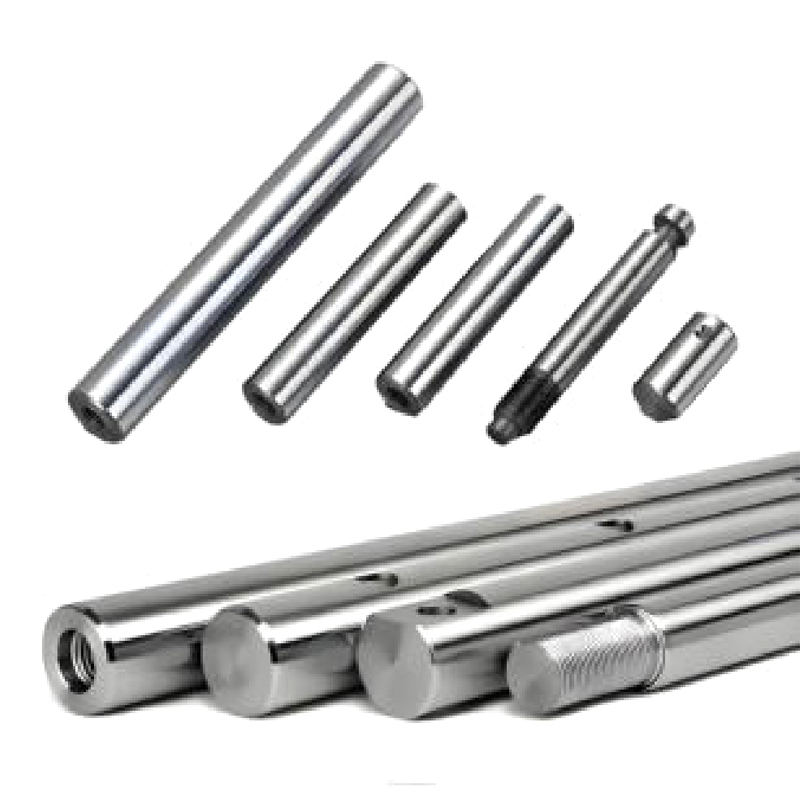 Precision Finish Alloy Steel Solid Piston RodPrecision-finish solid rod for close-fitting guide bushings or servo axes, offering alloy steel options, F5–F9 accuracy, Φ20–Φ500 diameters, and optional hard chrome plating.View Product →
Hollow rod solves a different problem. On long-stroke or large-diameter cylinders, the weight of a solid rod becomes a load in itself: it adds to the inertia the machine has to move, and on a horizontal axis it increases the bending moment on the guide. A hollow piston rod keeps the outer diameter the same while removing material from the centre, so stiffness drops far less than weight does. In some designs the bore doubles as an oil passage, which is why hollow oil pipe is used where the hydraulic circuit has to run through the rod rather than around it. Hollow rod is not a universal upgrade, since it costs more to make and the bore has to be sealed correctly, but where weight and packaging are the binding constraints it is often the only sensible answer.
Some customers do not want a bare bar at all. They want an assembly, meaning the rod body already joined to the end fitting and sometimes to the piston itself. There are three common ways to build one. A forged one-piece rod is upset or forged at the end so the head and the shank become a single continuous piece of metal, with no weld and no joint, which makes it the strongest option for rods that must not fail under impact. An integral welding rod has separately machined ends welded to the body with full penetration through the section. A split welding rod uses a split structure joined by welding, which is easier to machine and heat treat when the body is long or the geometry is awkward.
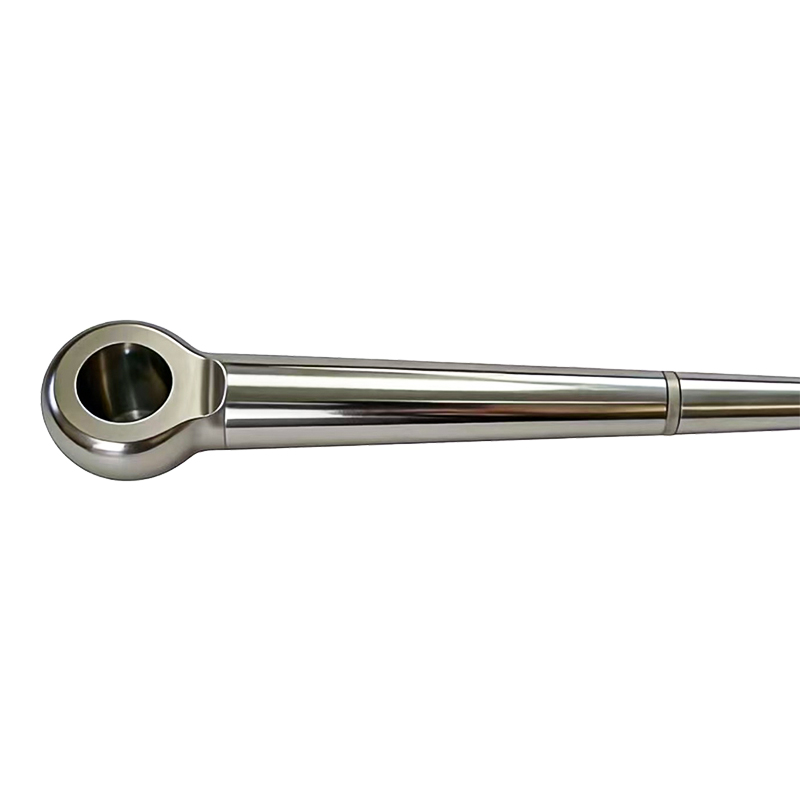 Forged One-Piece Hydraulic Cylinder Piston Rod AssembliesForged one-piece piston rod assemblies without weld or joint for heavy-duty, high-shock use; alloy steel, Φ20–Φ500 diameters, F5–F9 accuracy, optional hard chrome.View Product →
The choice comes down to load direction, the length-to-diameter ratio of the rod, and how much inspection the customer is prepared to carry out. Forged rods generally go into heavy-duty and high-shock positions; welded assemblies work well for medium loads and for shapes where cost control matters more than maximum strength. None of the three is better in the abstract, only better for a given job.
The surface layer does three jobs at once: it raises hardness, it lowers friction against the seal, and it keeps oxygen and water away from the base steel. Choosing a process is really a question about the environment the rod will live in. A rod on an indoor press in a dry workshop and a rod on a piling rig working in rain and grit do not need the same finish, and paying for the wrong one is money spent in the wrong place. Our piston rod coating options cover routes from plain hard chrome plating through composite layers to thermal and diffusion processes, and the table below is the short version of when each one usually earns its keep.
| Surface treatment | What it provides | Where it is normally used |
|---|---|---|
| Hard chrome coating | High hardness, low friction, even layer thickness | General hydraulic cylinders, rods exposed to damp air |
| Milky-white and hard chrome | Softer base layer plus a hard top layer, better corrosion resistance | Coastal, ship and port equipment, high-humidity sites |
| Nickel and hard chromium | Extra corrosion barrier beneath the hard layer | Chemical plants, offshore work, frequent washdown |
| Ceramic coating | Very high hardness, resistance to abrasion and particle impact | Mining, piling, dusty and gritty environments |
| Laser cladding | A metallurgically bonded layer that can rebuild worn material | Heavy-duty rods and the repair of worn or scored surfaces |
| QPQ coating | Salt bath nitriding with very low distortion and a matte finish | Precision rods where dimensional stability is critical |
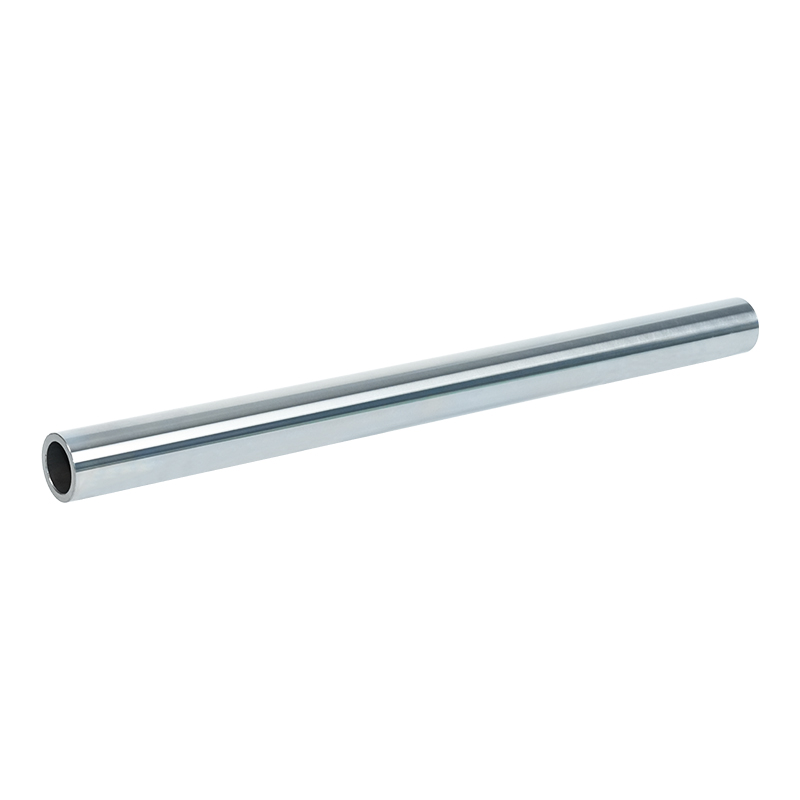 Hard Chrome Plated Piston Rod for Hydraulic ComponentsHard chrome plated piston rod offering wear, abrasion, fatigue and corrosion resistance, with controlled coating thickness for sealing, fit, dimensional restoration, and demanding hydraulic service.View Product →
One point worth repeating: thicker is not automatically better. Chrome layers that are too thick can chip under bending, and a coating chosen only for its hardness may have no answer to a salt-laden atmosphere. In practice the finish, the layer thickness and the base material have to be decided together.
When someone sends us a drawing, or just a sketch with dimensions on it, the same six variables usually decide whether the rod will work properly.
A piston rod rarely fails without warning. Usually it gives months of visible signals first.
What separates quotes on a piston rod is rarely the price alone; it is whether the supplier can explain how quality is controlled. Certifications such as ISO 9001 and ISO 14001, incoming material inspection, and coating thickness measured rather than eyeballed all matter.
It is also worth asking for a written description of the finishing sequence. Our own view of precision piston rod processing is that grinding and polishing, not the plating tank, are what make a rod precise. Capacity, plating bath dimensions and delivery rhythm are worth understanding too, especially when the rod is longer than usual or the drawing will be ordered again regularly.
On delivery, a factory that handles the work as one flow from raw bar through to final surface treatment is generally easier to trace back. Our own plants cover more than 25,000 square metres for exactly that reason, and the quality and environmental systems have been running since 2011.
If there is one takeaway here, it is that a hydraulic cylinder piston rod is not a commodity to be bought by the metre and forgotten. Get the base material, straightness, surface process and layer thickness right for the duty, and an ordinary rod will run for years without trouble. Get any one of them wrong, and it may fail within months. If you are specifying a rod for a new machine, or working through a batch that keeps coming back, we are glad to go through the options with you and keep it practical.

Contact Us
+86-137-0618-5800
No. 3 Dujuan West Road, Hudai Town, Binhu District, Wuxi City, Jiangsu Province
Get in Touch
Mobile

 English
 русский
 Deutsch