Why Straightness Tolerance Gets Stricter as Rod Length Increases
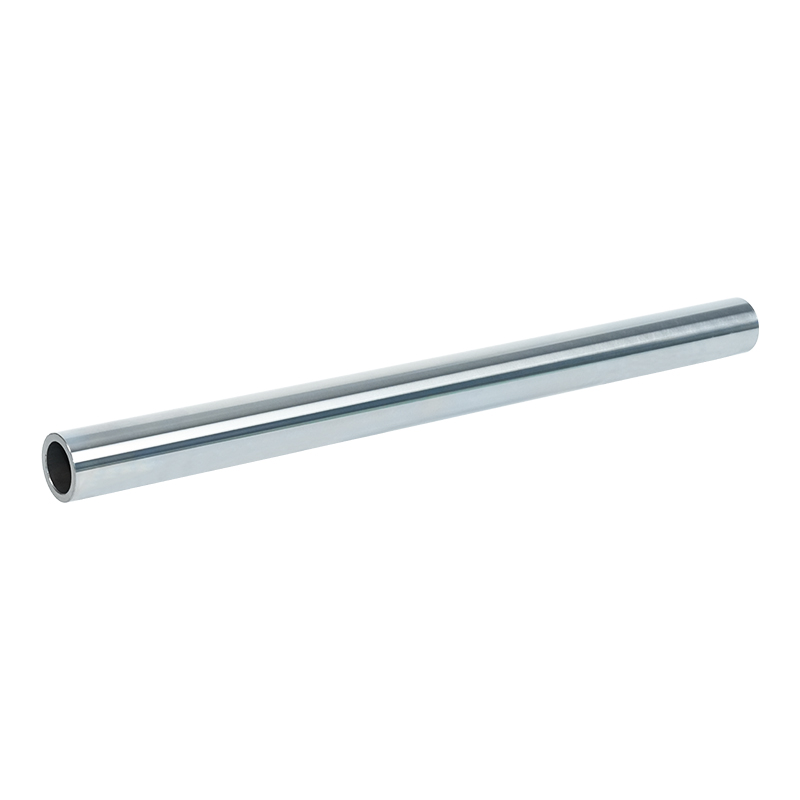
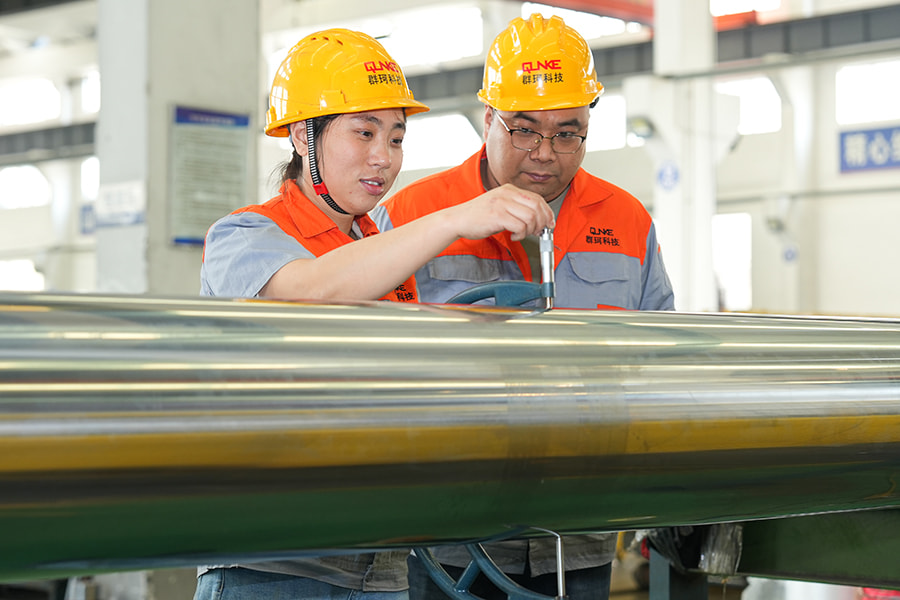
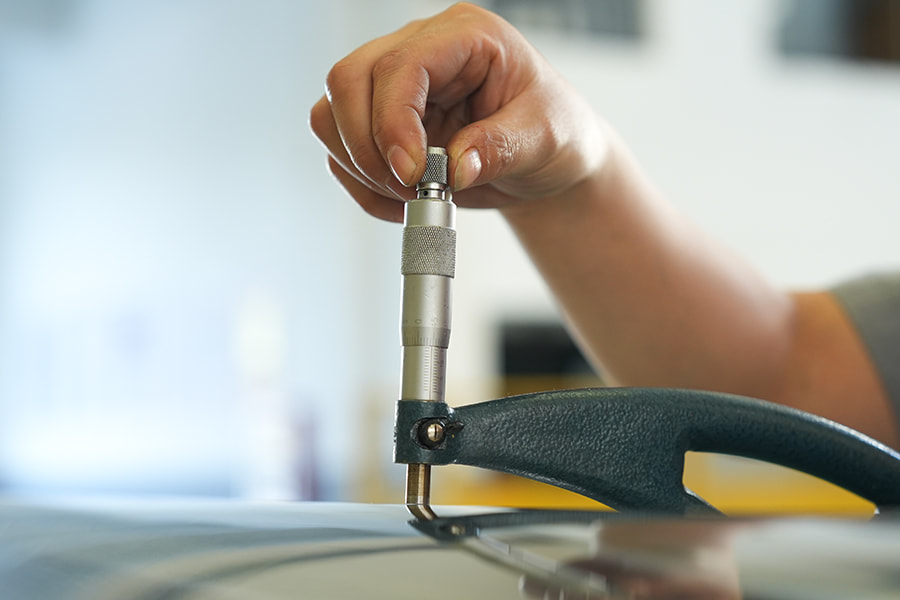
Most people assume straightness tolerance is a fixed value, but for an extra-long hydraulic piston rod it actually has to scale down proportionally as length increases, not stay constant. A rod that's perfectly acceptable at 2 meters with a certain deviation per meter can become mechanically unstable at 6 or 8 meters if the same absolute tolerance is applied instead of a tighter per-meter figure. This is why extra-long rods are typically specified with straightness expressed as deviation per meter of length rather than a single overall number, since a small angular error compounds significantly over a longer span.
The compounding effect matters most at full extension, where the unsupported length of the rod is at its greatest and even a slight bow translates into uneven seal contact pressure. Over thousands of cycles, that uneven contact accelerates wear on one side of the seal long before the rest of the seal shows any sign of degradation.
Boom Hydraulic Piston Rods Deal With Load Angles, Not Just Load Weight
A common misunderstanding with boom hydraulic piston rods is treating the rated load as a purely vertical force. In practice, boom cylinders experience constantly shifting load angles as the boom articulates through its working range, which introduces a bending moment on the rod in addition to the axial compressive or tensile force it was primarily designed for. This combined loading is why boom rods generally need a larger diameter relative to their stroke than a rod used in a simple straight-line lifting application would require.
Where the Extra Stress Concentrates
The bending stress from an angled load doesn't distribute evenly along the rod. It concentrates near the point of maximum unsupported length, typically close to full extension, which is also where buckling risk is already highest. This overlap is why boom rod failures, when they occur, are disproportionately likely to happen during extended, angled operation rather than during retraction or neutral positioning.
Slenderness Ratio: The Number That Actually Predicts Buckling
For extra-long boom hydraulic piston rods, the single most useful engineering figure isn't diameter or material grade on its own — it's the slenderness ratio, calculated from the rod's effective length divided by its radius of gyration. A high slenderness ratio means the rod is much more prone to buckling under compressive load than a shorter, stockier rod would be at the same diameter, even if both are made from identical material.
| Slenderness Ratio Range |
Buckling Risk Level |
Typical Design Response |
| Low |
Minimal |
Standard diameter sizing is usually sufficient |
| Moderate |
Noticeable under side-load conditions |
Increased rod diameter or intermediate guide support |
| High |
Significant, especially near full extension |
Larger diameter, higher-grade steel, or telescoping design |
This is one of the calculations we run early in the design stage whenever we're developing an extra-long boom hydraulic piston rod, since guessing at diameter based on stroke length alone tends to either overbuild the rod unnecessarily or leave it vulnerable to buckling under real working conditions.
Coating Thickness and Hardness Aren't the Same Trade-off
A surprising number of buyers assume a thicker coating automatically means a more durable hydraulic cylinder piston rod, but coating thickness and substrate hardness solve two different problems. A thicker hard chrome layer improves corrosion resistance and can extend the wear life of the coating itself, but if the underlying steel hasn't been hardened through induction hardening or a similar process, the rod remains vulnerable to deformation under heavy side loading, since the coating doesn't add structural strength to the core material.
- Thicker coatings improve resistance to surface corrosion and abrasive wear over time
- Core hardness determines how well the rod resists bending or denting under mechanical impact
- Excessively thick coatings can actually increase the risk of flaking if adhesion isn't properly controlled during plating
- A rod with both a hardened core and an appropriately thin, well-adhered coating typically outperforms one with only a thick coating over a soft core
Intermediate Support Spacing Changes the Effective Buckling Length
In multi-stage boom assemblies, the effective buckling length of a rod isn't simply its full physical length — it's the unsupported distance between guide points. Adding intermediate supports along a boom hydraulic piston rod's travel path can meaningfully reduce the effective length used in buckling calculations, which is why some extra-long boom designs incorporate additional guide bushings or support brackets rather than relying purely on a larger rod diameter to handle the load.
This trade-off matters in applications like piling machinery and excavators, where boom geometry is often constrained by the overall size of the machine. Rather than scaling up rod diameter indefinitely, which adds weight and cost, engineering the support structure around the rod is frequently a more efficient way to control buckling risk while keeping the assembly within a manageable weight budget.
Transport and Handling Cause More Damage Than Most People Expect
It's easy to assume that once an extra-long hydraulic piston rod passes final inspection, the risk of damage is behind it, but transport and handling account for a significant share of the surface defects found in long rods before they're even installed. A rod resting unsupported across its full length during shipping can develop a slight permanent bow simply from its own weight, particularly if it isn't cradled at multiple points along its length.
- Rods should be supported at multiple points during transport, not just at the two ends
- Protective sleeving helps prevent surface scratches from contact with packaging materials or adjacent rods
- Vertical storage is sometimes preferred over horizontal storage for very long rods to avoid gradual sag over extended storage periods
- Lifting points should be identified in advance, since improper lifting can introduce a bend that isn't visible until the rod is under load
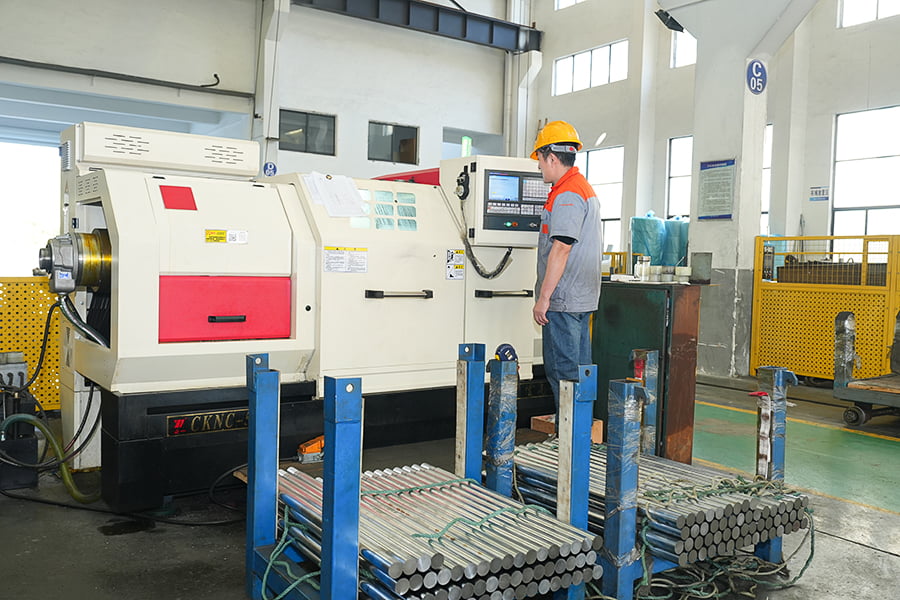
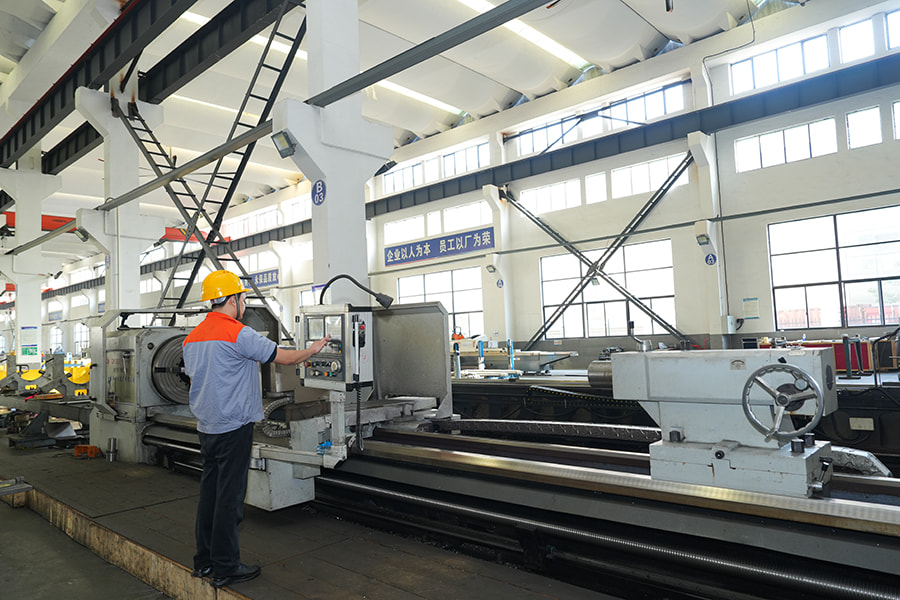
Having manufactured piston rods for water conservancy, marine, and mining equipment out of our Wuxi facility for years, we've found that packaging and handling procedures for extra-long rods often need just as much attention as the machining process itself.
Fatigue Life Is a Different Question Than Static Strength
A hydraulic cylinder piston rod can easily pass a static load test and still fail well before its expected service life if fatigue performance wasn't properly accounted for. Static strength testing confirms the rod can handle a given load once, but fatigue life describes how the rod holds up under repeated cycling, which is the condition it actually experiences in real operation. Surface finish quality plays an outsized role here, since microscopic surface irregularities act as stress concentration points where fatigue cracks tend to initiate over thousands of cycles.
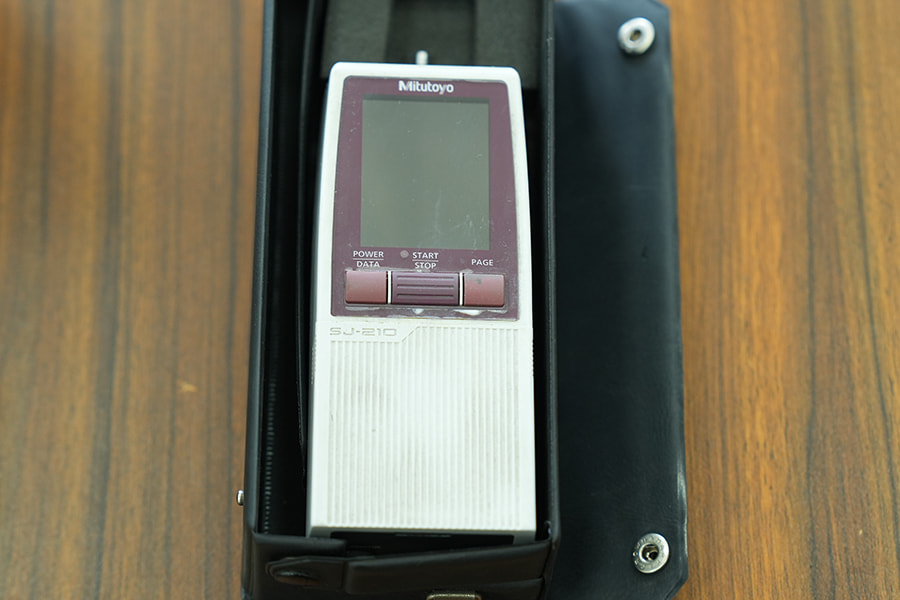
This is part of why surface roughness specifications for piston rods are often stricter than what would be needed purely for seal compatibility. A rod that seals perfectly well at a slightly rougher finish may still develop fatigue cracking sooner than one machined and polished to a finer tolerance, particularly in high-cycle applications like excavator boom cylinders that extend and retract constantly throughout a working day.

 English
 русский
 Deutsch