2026-07-03
Content
On a luffing crane, the jib doesn't move on its own — it's the luffing piston rod assembly doing the heavy lifting, literally. This component controls the angle of the jib as it raises and lowers a load, and it does so under some of the highest cyclical stress found anywhere on the machine. This guide covers how luffing piston rod assemblies work, what they're made of, and what to check before selecting, inspecting, or replacing one.
A luffing piston rod assembly is the rod-and-piston combination inside a luffing cylinder that extends and retracts to raise or lower a crane's jib. Unlike a standard hoisting cylinder that mostly handles vertical force, a luffing cylinder has to manage constantly changing load angles as the jib moves through its full range of motion. The rod itself bears the direct mechanical load, transferring the force generated by hydraulic pressure into the physical movement that adjusts the jib's position.
Because luffing operations involve frequent adjustments, especially during load positioning, the piston rod assembly goes through repeated extension and retraction cycles throughout a normal work shift. This constant cycling, combined with the side loads created by jib angle changes, makes the rod assembly one of the more demanding hydraulic components on the entire crane.
A complete luffing piston rod assembly is made up of several parts working together, and understanding each one helps when diagnosing a problem or evaluating a replacement part.
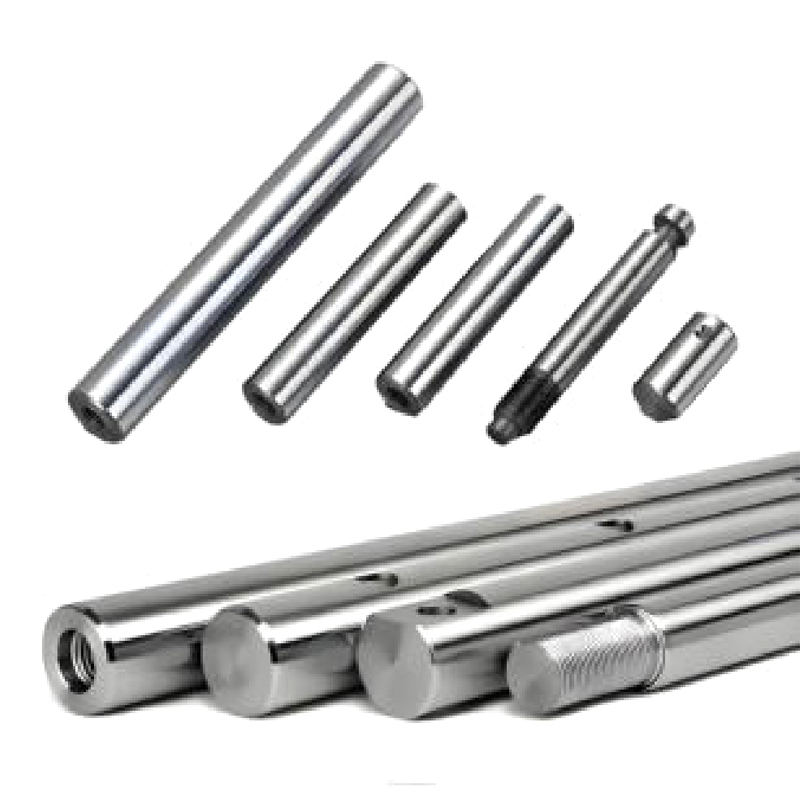
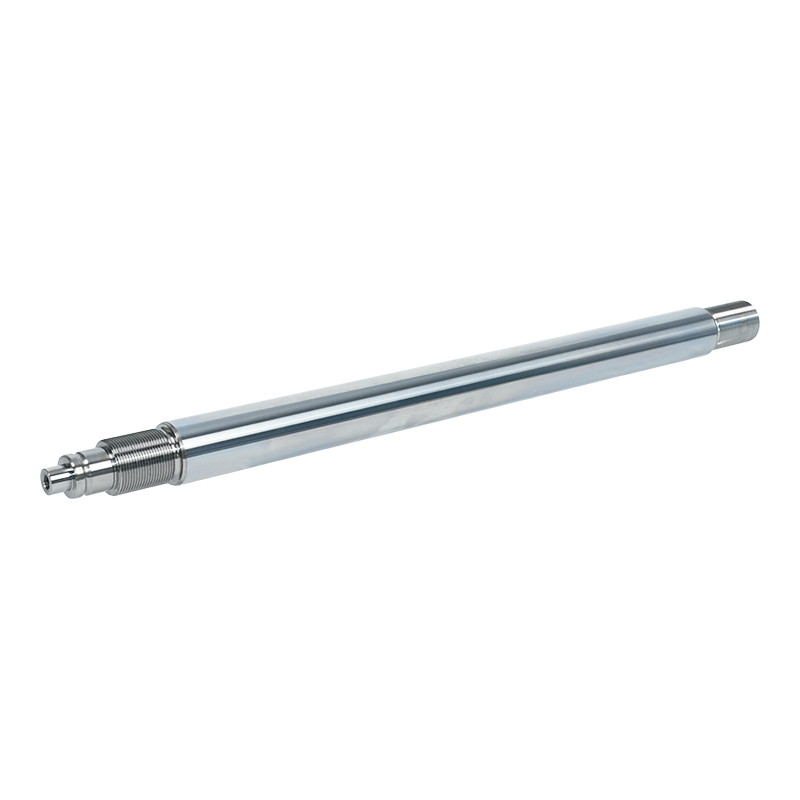
The rod is the long, precision-ground shaft that extends out of the cylinder body. Its surface finish and hardness directly determine how well it resists wear from the seals it passes through on every stroke, and its straightness affects how evenly load is distributed during angled movement.
Mounted at the end of the rod inside the cylinder bore, the piston head separates the cylinder into two pressure chambers. Seals around the piston head prevent hydraulic fluid from bypassing between chambers, which is what allows the cylinder to generate controlled, directional force.
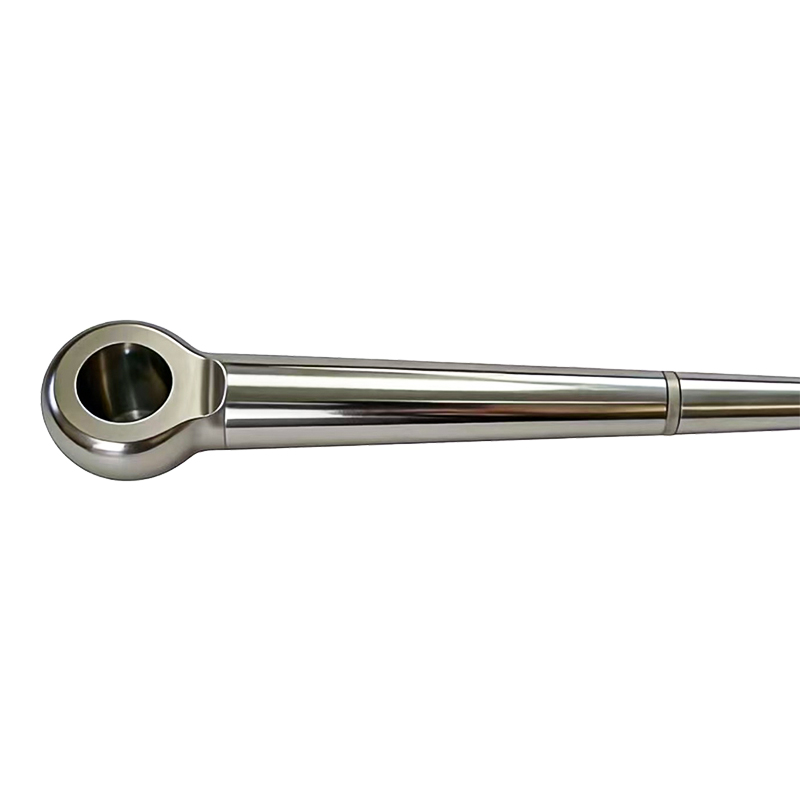
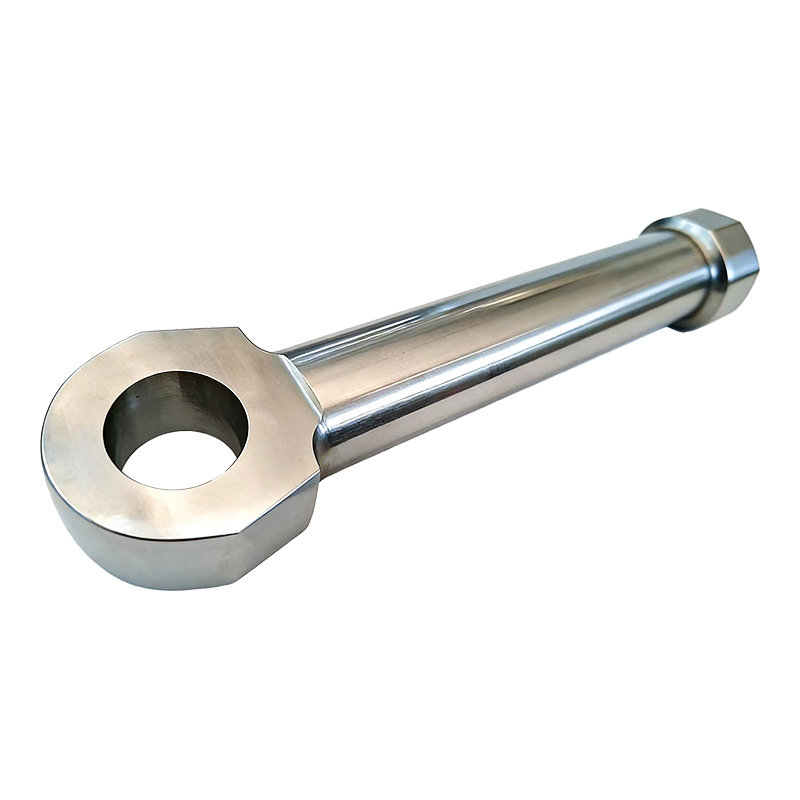
At the end of the rod, a rod eye or clevis connects the assembly to the jib structure through a pin joint. This connection point has to handle the pivoting motion that occurs as the jib angle changes, so wear at this joint is one of the most common maintenance points on the entire assembly.
A set of seals and wipers along the rod's travel path keep hydraulic fluid contained and prevent dirt or moisture from entering the cylinder. The condition of the rod surface has a direct effect on how long these seals last, which is why surface quality on the piston rod matters as much as the seal material itself.
Given the repeated cycling and side loading a luffing piston rod assembly experiences, material choice and surface treatment play a major role in how long the assembly lasts before needing service.
| Treatment | Main Benefit | Typical Application |
| Hard Chrome Plating | Wear resistance and corrosion protection | Standard luffing cylinders in general crane use |
| Induction Hardening | High surface hardness with a durable core | Heavy-lift cranes with frequent high-load cycles |
| Nickel-Chrome Coating | Enhanced corrosion resistance over standard chrome | Offshore, marine, and coastal crane operations |
| Ceramic Coating | High wear and chemical resistance | Harsh environments with heavy dust or chemical exposure |
Because a luffing piston rod assembly is subject to constant angled loading, wear tends to appear earlier and more visibly than on cylinders used for simpler, straight-line lifting. Recognizing the early signs helps prevent a minor issue from turning into an unplanned equipment shutdown.
Replacing a luffing piston rod assembly is a significant maintenance job, so it's worth confirming a few details before ordering a replacement part to avoid a mismatch or premature repeat failure.
Regular inspection is the most effective way to extend the service life of a luffing piston rod assembly. Checking the rod surface for scoring or corrosion during routine maintenance intervals catches problems before they damage the seals, and keeping the rod clean of debris and buildup reduces the chance of premature wear during operation.
Lubrication of the pin joints at the rod eye or clevis connection should also be part of a standard maintenance schedule, since dry or worn pin connections increase play and place additional stress on the rod itself. Tracking cycle counts and inspection history over time also helps operators anticipate when an assembly is approaching the end of its expected service life, rather than waiting for a visible failure to force an unplanned repair.

Contact Us
+86-137-0618-5800
No. 3 Dujuan West Road, Hudai Town, Binhu District, Wuxi City, Jiangsu Province
Get in Touch
Mobile

 English
 русский
 Deutsch